Summer-Ready Heat Pump Installation for Hobart Homes
A heat pump installation for Hobart homes provides efficient reverse-cycle heating and cooling from a single unit, helping you stay comfortable through Tassie's warm summers and cool winters. By moving heat in or out of your home rather than generating it, a modern heat pump can deliver reliable comfort while reducing energy use and power bills for Southern Tasmanian homeowners.
Stay Cool This Summer With Smarter Heating and Cooling
Heat pumps are becoming a favourite in Hobart because they give you cooling and heating in one simple system. One wall unit and one outdoor unit can look after the main living area or bedroom, and there is no need to juggle separate heaters and portable AC units.
In Southern Tasmania, there is a steady shift towards efficient reverse-cycle systems as households look for better performance and lower running costs. Warmer summers and more frequent heatwaves are pushing older portable units and plug-in heaters to their limits. Homeowners are choosing smarter systems that work with our climate and our homes, from weatherboard cottages to newer brick units.
Why Heat Pumps Are Ideal For Hobart Summers
Modern reverse-cycle heat pumps are well suited to Hobart's pattern of warm days and cooler evenings. During a January to March heatwave, they can quietly cool your living areas through the afternoon, then flip to gentle heating if the temperature drops later that night.
Compared with other options, many homeowners find that heat pumps give better comfort for less energy, especially over time. For example:
- Portable air conditioners often draw a lot of power and only cool a small area
- Older electric heaters can be expensive to run through shoulder seasons
- A correctly sized heat pump usually delivers more heating and cooling for each unit of electricity
On top of that, there are health and comfort perks that make summer easier:
- More even temperatures across the room
- Built-in filters that help clean the air as it moves through the unit
- Dehumidifying modes that take the sticky edge off muggy days
Key Things To Consider Before Heat Pump Installation In Hobart
Hobart's climate and houses are a bit different from many mainland cities, so sizing and placement need local thought. Cool nights, sea breezes and shaded streets mean a room that feels mild in the morning can still trap heat later in the afternoon. Heritage cottages, solid brick homes and compact units all behave differently when it comes to heating and cooling.
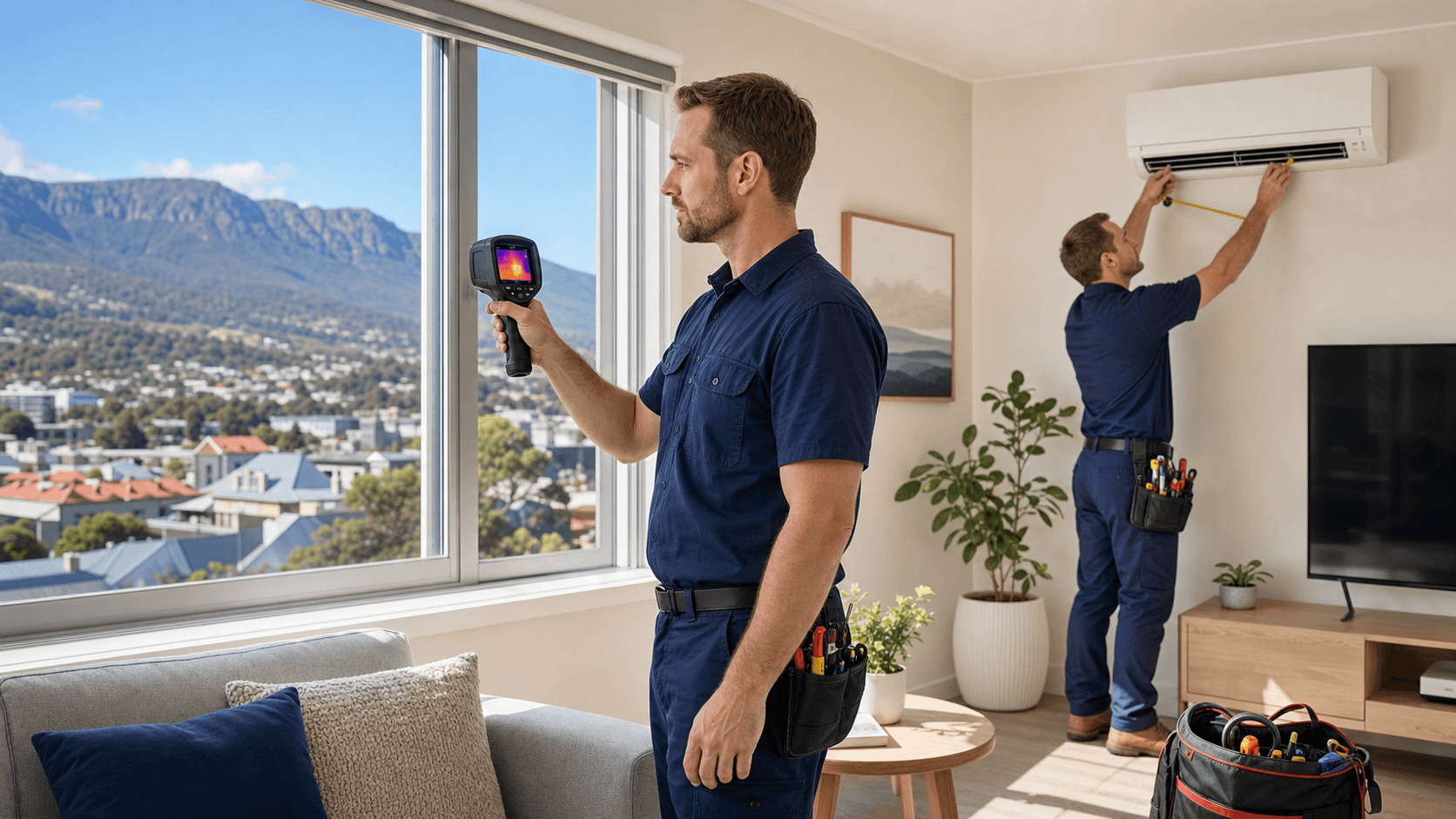
A proper assessment before any heat pump installation in Hobart should look at:
- Room size, ceiling height and layout
- Insulation in the ceiling, walls and underfloor if accessible
- Window size, glazing type and how much sun or shade the room gets
- Orientation of the home to the sun and local wind
- Existing electrical capacity and switchboard condition
Local compliance and safety also matter. Outdoor units need adequate clearance for airflow, safe mounting and protection from strong coastal winds and salty air where that applies. Electrical work must meet current standards, with correctly sized circuits, isolators and weatherproofing around any wall penetrations.
Installation Steps
A smooth installation starts with clear planning and good communication. A typical process for a new heat pump in Greater Hobart and Southern Tasmania usually includes:
- In-home consultation to assess rooms, discuss your comfort goals, and suggest suitable system options for Hobart's climate.
- Detailed design and quote to confirm system size, locations, electrical requirements and all inclusions so you know exactly what to expect.
- Agreeing on locations to select indoor and outdoor unit positions that balance performance, appearance and noise for your specific Tasmanian home.
- Booking the installation day to schedule a time, outline expected time on site, and discuss access and any temporary power interruptions.
- Mounting the indoor unit to fix it level and secure it on the chosen wall, with appropriate support and clear airflow.
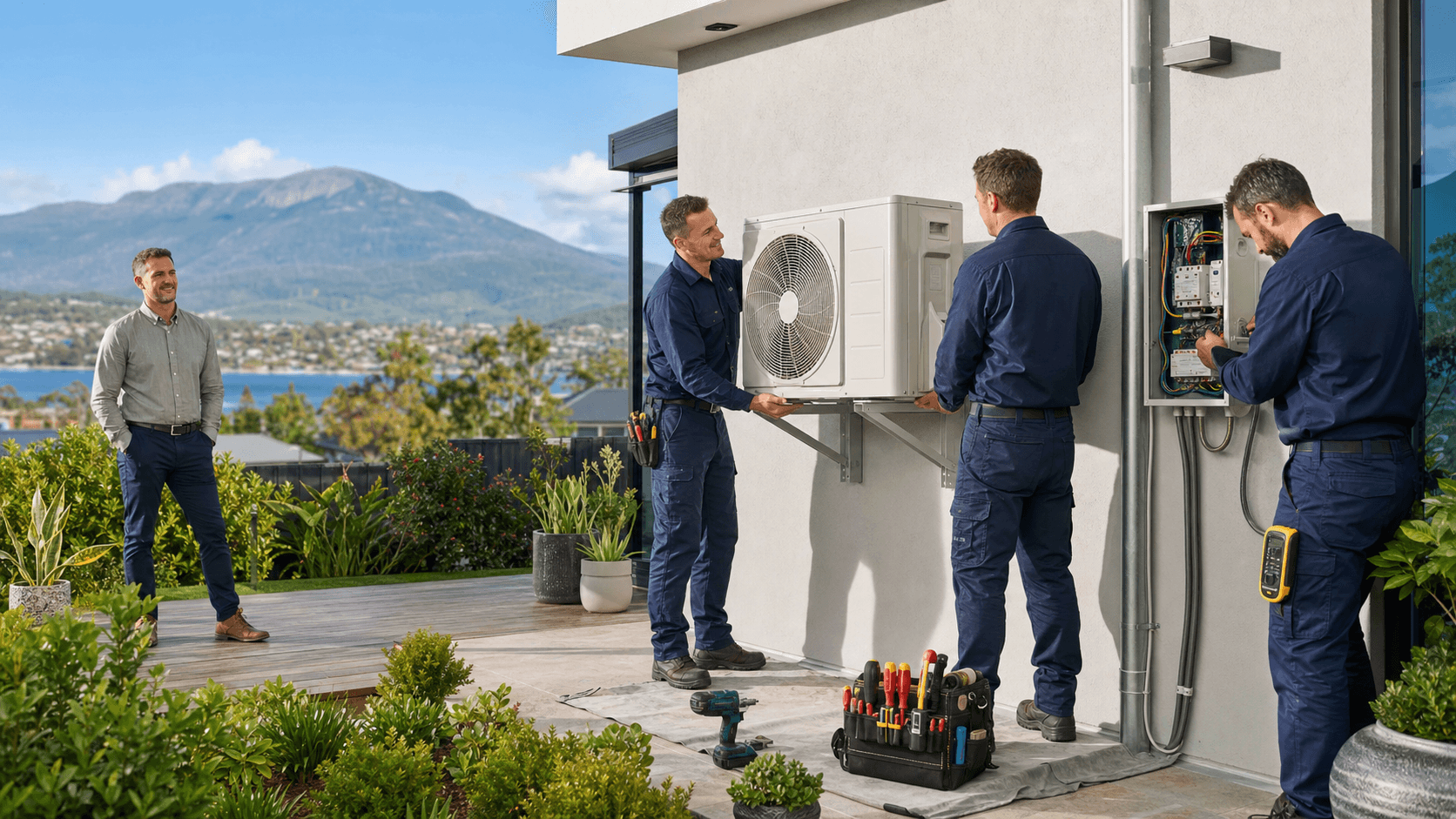
- Installing the outdoor unit to mount it on brackets or a concrete pad, allowing for salt air, frost and strong winds where relevant in Hobart suburbs.
- Running refrigeration and electrical connections to route pipework and cabling neatly and safely, with correct insulation, weatherproofing and isolators.
- Commissioning and testing to pressure-check and leak-test refrigerant lines, confirm airflow and fan operation, and test both heating and cooling modes.
- Handover and clean-up to tidy the work area, walk you through the controls and maintenance, and ensure the system is ready for immediate use in summer and winter.
Why Choose Us
When you are choosing someone to install a heat pump in Hobart, local experience counts. Homes across Greater Hobart and Southern Tasmania face salty air in some suburbs, frosts in others and often tight outdoor spaces, so the installer needs to know what works long term.
Why Homeowners Choose 4Front for Heat Pump Installation in Hobart:
- Local Tasmanian expertise in weather patterns, sea breezes, frosts and common building styles.
- In-house electricians and refrigeration technicians working together for a seamless installation.
- System design tailored to each room and home, not one-size-fits-all solutions.
- Fully licensed and insured trades for all electrical and refrigeration work.
- Clean, careful workmanship and clear, upfront quoting with no surprises.
- Support for quality brands that cope well with Hobart's coastal air and cold mornings.
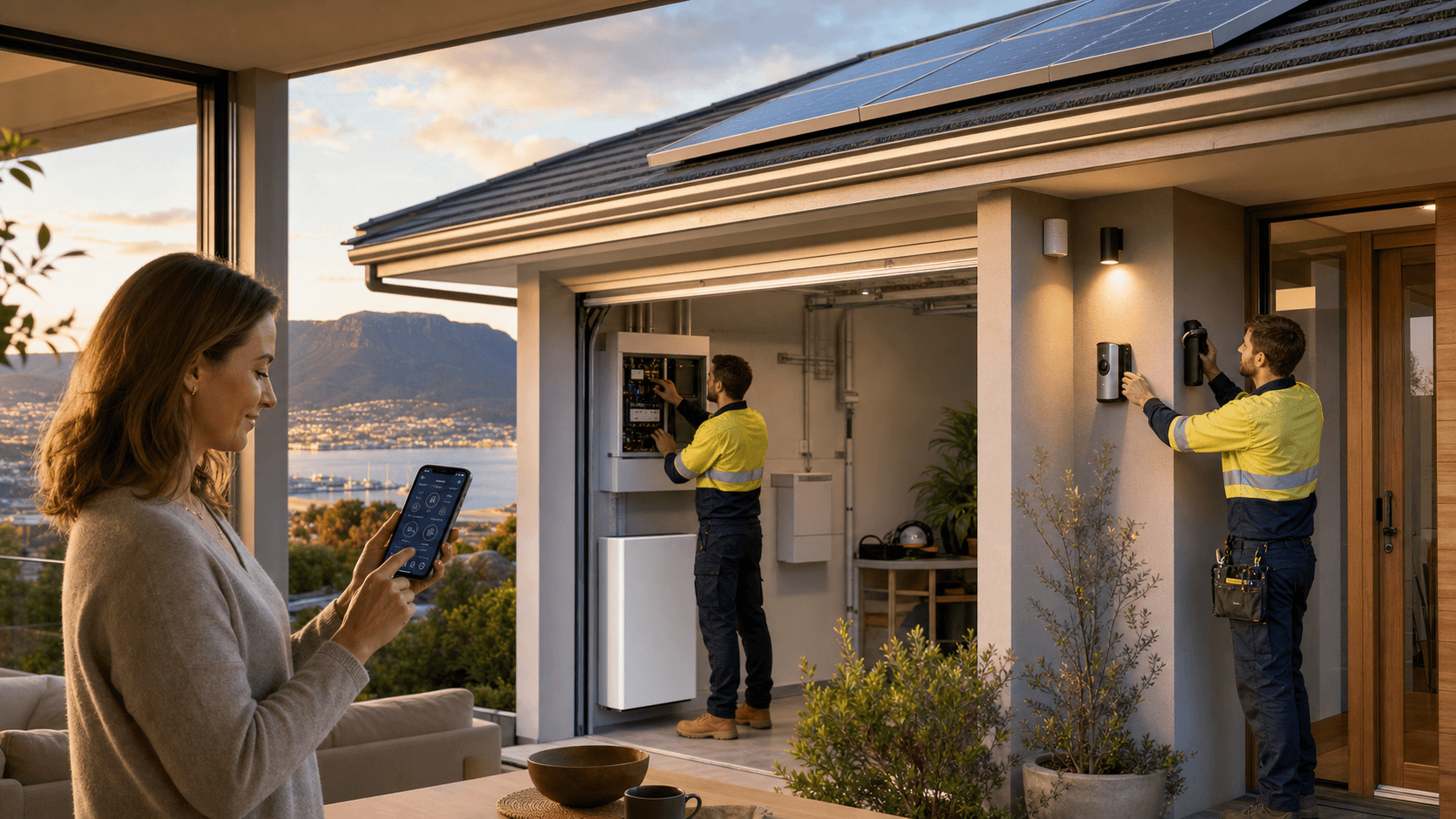
- Ongoing servicing, maintenance plans and advice on pairing your heat pump with solar.
Maximising Summer Performance and Energy Savings
Using your heat pump well is just as important as buying the right one. Small changes in how you run it can improve comfort and lower energy use in Tasmanian conditions.
Practical Tips for Hobart Summers Include:
- Set the temperature to a comfortable level instead of very low, so the unit does not work harder than it needs to.
- Use timers and sleep modes at night so the room stays comfortable without overcooling.
- Keep windows and doors closed while cooling, and use blinds or curtains to block strong afternoon sun.
- Combine the system with good insulation to keep cool air in and hot air out, which is especially useful in older Hobart weatherboard homes.
Simple maintenance jobs can be done by most homeowners. Cleaning or vacuuming indoor filters as recommended helps airflow and keeps air fresher. Keeping the outdoor unit clear of leaves, cobwebs and garden growth allows it to breathe properly.
For more advanced control, smart controllers and zoning can help you cool only the rooms you are using. Regular servicing by a professional before peak summer helps pick up small issues early, so the unit runs smoothly during longer warm spells.
Authoritative Guide to Heat Pump Installation in Hobart
Heat Pump Types Suited to Hobart Homes:
- Single split systems, one indoor and one outdoor unit, ideal for a main living space or single room.
- Multi-split systems, several indoor units connected to one outdoor unit, useful for multiple rooms or townhouses with limited outdoor space.
- Fully ducted systems, a central indoor unit feeding air through ceiling or floor ducts for whole-of-home comfort.
Installation timeframes vary, from a straightforward single split that can often be completed in a day, to more complex multi-split or ducted setups that take longer, especially where access is tight or switchboard work is needed in older Tasmanian homes. With proper care, a quality system can have a long working life in Tasmanian coastal and inland conditions.
Common Hobart-Specific Considerations Include:
- Noise, good placement of the outdoor unit, plus vibration-reducing mounts, helps keep noise away from bedrooms and neighbours in denser suburbs.
- Frosty mornings, modern reverse-cycle systems are designed to defrost and keep heating, although performance depends on correct sizing and installation for Tasmanian winter lows.
- Tight outdoor spaces, for small yards or balconies, careful positioning and compliant mounting brackets can usually provide a safe, practical solution without blocking pathways.
Budget planning for a new heat pump should consider more than just the purchase. Factors that influence the final cost include system type, capacity, complexity of pipe runs, any switchboard upgrades and wall or roof access, which can be more involved in older Hobart homes. While the upfront outlay is an investment, many households find that lower heating and cooling energy use, along with any available rebates or energy-efficiency programs, helps offset the cost over time.
Quick Answers to Common Hobart Heat Pump Questions
Q: How Long Does Heat Pump Installation in Hobart Usually Take?
A: A standard single split installation usually fits within a single working day, while larger multi-room or ducted systems can take longer depending on access and wiring needs.
Q: What Size Unit Do I Need for a Typical Hobart Living Room?
A: The right size depends on room area, ceiling height, insulation and windows, so a proper on-site assessment is the best way to choose a unit that will cool and heat effectively.
Q: Will a Heat Pump Work Efficiently on Cold Tasmanian Nights?
A: Yes, modern reverse-cycle heat pumps are built to operate in low temperatures, and correct sizing and placement help them heat efficiently on frosty Hobart evenings.
Q: Where Is the Best Place to Install the Outdoor Unit in Hobart?
A: The outdoor unit should go in a spot with good airflow, solid support and some protection from driving rain and salty winds, while also staying accessible for servicing.
Q: How Often Should I Service My Heat Pump for Summer and Winter Reliability?
A: Professional servicing is generally recommended at regular intervals, often once a year, so components, refrigerant levels and electrical connections stay in good condition.
Q: Can I Run My Heat Pump off Solar to Reduce Summer Cooling Costs?
A: Yes, many homeowners use solar power to cover a portion of their daytime cooling, and matching your system and usage to your solar setup can help you make the most of it.
Q: Is a Heat Pump Suitable for Small Hobart Units or Townhouses?
A: A compact split system is often ideal for smaller spaces, as long as the indoor and outdoor units are positioned carefully to meet body corporate rules and space limits.
With over 30 years of combined experience serving Tasmania, 4Front specialises in custom electrical and solar installations, heat pump systems, energy-efficient lighting design, and comprehensive energy audits. We also provide tailored heating, cooling, and energy efficiency solutions to suit your home and lifestyle.
Serving Greater Hobart & Southern Tasmania
0468 059 603
info@4frontservices.com.au
Shop 91/29 Channel Hwy, Kingston TAS 7050
Get Started With Your Project Today
If you are ready to upgrade your home's comfort and efficiency, our team at 4Front Services can help you with expert heat pump installation in Hobart tailored to your property. We will walk you through the options, explain the running costs and rebates, and make sure the system is sized correctly from the start. To discuss your home and get a clear, upfront quote, simply contact us and we will be in touch to book a convenient time.