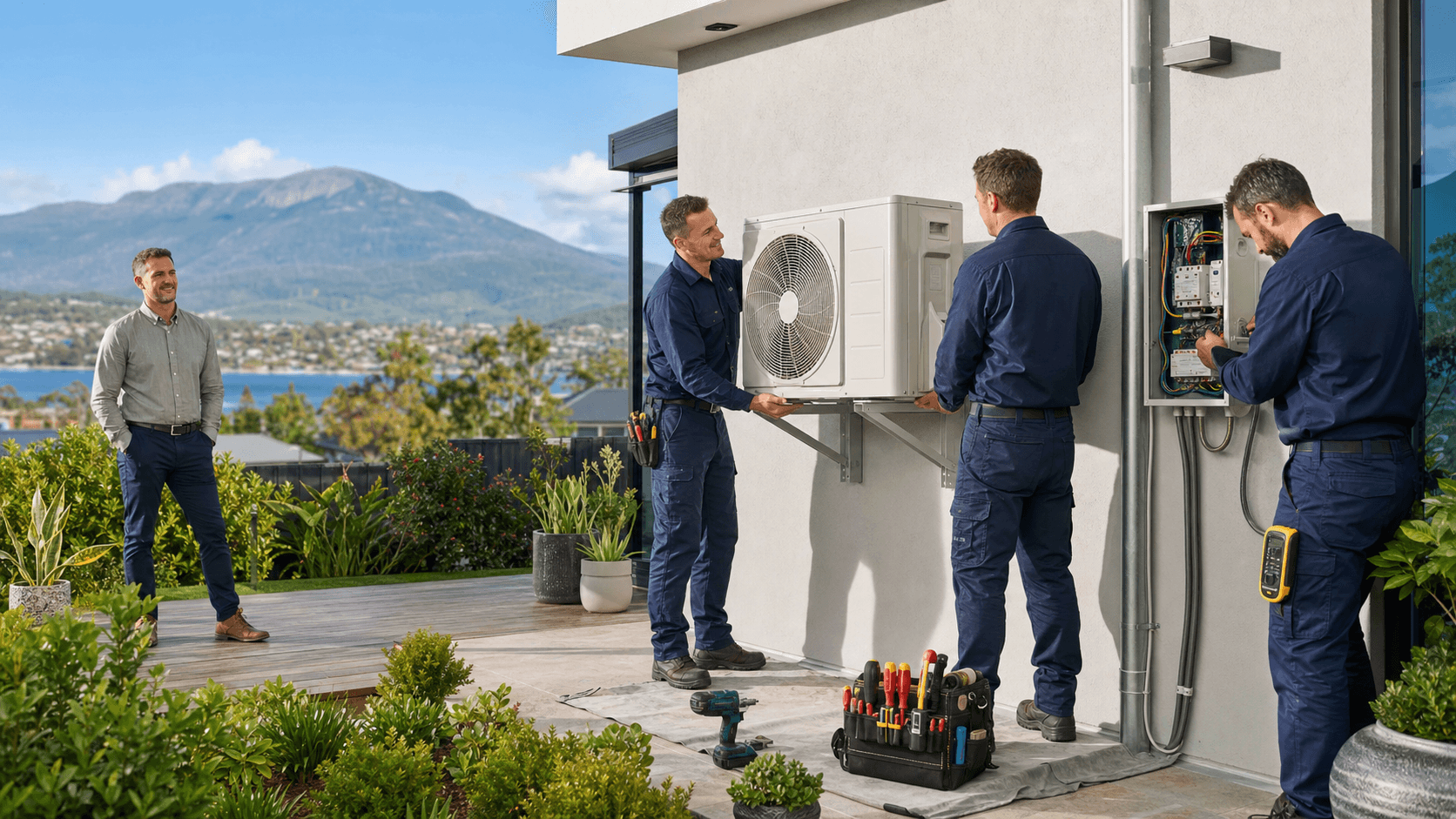
Authoritative Guide: Heat Load Assessments and Summer-Ready Air Conditioning in Hobart (2026)
A heat load assessment for Hobart homes is a professional calculation of how much cooling your home really needs in local summer conditions so your air conditioner is correctly sized. The main benefit for homeowners is better comfort during heatwaves with lower running costs and fewer bill shocks.
By combining a tailored heat load assessment with sealing insulation gaps and choosing the right air conditioning installation in Hobart, your home can keep cool air in, keep hot air and harsh UV out, and avoid wasting money on a system that is too big or too small. With warmer spells lasting longer, 2026 power prices rising and more people working from home, now is the time to sort out your home before the first heatwave hits.
We are based in Hobart and our team designs and installs air conditioning, solar, batteries and electrical systems in-house. That means we can match each system to Tasmanian conditions, not just copy generic mainland sizing rules that do not fit our climate, UV levels or housing styles.
Heat Load Assessments and Summer Cooling Guide in Hobart
Why Heat Load Assessments Matter in Hobart Homes
A residential heat load assessment looks at how your home gains and loses heat in summer. Instead of guessing from floor area alone, we look at factors such as:
- Room sizes and ceiling heights
- Window orientation, glazing type and shading
- Existing ceiling, wall and underfloor insulation
- Air leakage points such as gaps, vents and old frames
- Local weather patterns like southerly winds and strong sun
Hobart summers are milder than many mainland cities, but they can be changeable. You can get cool changes, hot northerlies, bright UV and warm nights, sometimes in the same week. All of that affects the size and type of air conditioner that will actually work well.
Skipping a proper heat load check can lead to:
- Oversized units that cool too fast, switch on and off often and leave rooms sticky and humid
- Undersized units that never quite reach set temperature on those 30°C days
- Systems that were sized as if you lived in a hotter mainland climate, so you pay more to run them than needed
A local assessment also needs to think about Hobart microclimates. Homes on hills can catch more wind. Areas near the Derwent River can get glare and reflections. Older weatherboard and heritage homes often have thinner walls, air gaps and single glazing. When we design a system, we factor those details in before any air conditioning installation in Hobart goes ahead, so capacity, placement and zoning are suited to the home, not just the plan on paper.
Seal, Shade and Insulate Before You Size
The smartest sequence is to fix the building envelope first, then size your system. If your house leaks cool air or bakes in the sun, you will always need a bigger system than you really should.
Common Tasmanian trouble spots include:
- Gaps in timber floors that let draughts move through the house
- Skillion or low-pitched roofs with little or no insulation
- Older aluminium sliding windows with poor seals
- Chimneys, vents and gaps where sea breezes or westerly winds push air in and out
Simple building improvements can cut your heat load, such as:
- Weather stripping and quality door seals
- Topping up roof space insulation where access allows
- Insulating under floors where practical
- Improving window seals, adding external shading or using reflective films
When you do this work first, you often need a smaller AC system, which is cheaper to run and more comfortable to live with. The benefits grow again when you combine it with solar PV and, if suitable, batteries. Many homes can run a good amount of their daytime cooling from their own panels, reduce peak grid use and get a better return from both their building upgrades and their air conditioner.
Right-Sizing Air Conditioning Installation in Hobart
Right-sizing means choosing the capacity, type and zoning that match the measured heat load of your home, not just a rough rule like a certain kilowatt per square metre. For one home that might mean a single high-efficiency split system, for another it might mean a multi-split or a ducted setup with zones.
When we plan air conditioning installation in Hobart, we focus on:
- On-site inspection and detailed heat load calculations
- Clear advice on system type and efficiency ratings
- Indoor unit placement for good airflow and even temperatures
- Outdoor unit placement that suits local wind, salt air and quiet streets
Two homes with the same floor area can have very different needs. For example, a 1950s weatherboard place in a suburb with older stock, timber floors and single glazing will usually need more capacity than a newer home in a growth area with modern insulation and tight seals. Right-sizing means you pay for the performance you need now and protect yourself from higher tariffs in years to come, instead of locking in a system that wastes energy every summer.
Smart Timing, 2026 Incentives and Integrated Summer Solutions
Timing makes a big difference. If you wait until the first hot spell, installer demand often spikes. That can mean longer lead times and less choice in popular models. Acting in winter or early spring gives you more breathing room to plan, improve insulation and pick the right system before the rush.
In 2026, there are often incentives and schemes that support energy-efficient upgrades such as:
- Small-scale technology certificates (STCs) for certain efficient systems
- State-based energy efficiency programs for insulation or heat pumps (availability can change year to year)
- Demand management offers from electricity networks for smarter usage
These can change from time to time, so it helps to have someone on your side who understands what applies when you are ready to install.
The biggest gains usually come when you think of your home as a whole system. Bundling work like:
- Solar PV setup or upgrade
- Battery-ready wiring
- Hot water heat pumps
- EV chargers
- Right-sized cooling and heating
can create a joined-up summer plan. That kind of plan can smooth out bill shocks, give you more resilience during heatwaves and add long-term value to a Hobart property.
Why Choose Us: 4front Services for Hobart Summer Comfort
We find many people want a clear, simple process and one team that looks after the whole job. That is how we work.
Why Choose Us
- Local Hobart and southern Tasmania know-how, including coastal winds, local UV and mixed summer weather
- In-house design and installation team, not a chain of subcontractor hand-offs
- Whole-home thinking across electrical, solar, batteries and air conditioning
- Transparent quotes with clear, plain language explanations of heat load findings and system options
- Ongoing support, servicing and advice so your system keeps performing through many summers
Installation Steps for Air Conditioning in Hobart
- On-site inspection and detailed heat load assessment
- Practical insulation and sealing recommendations to lower cooling demand
- System design and selection, with a placement and zoning plan
- Licensed electrical and mechanical installation by local technicians
- Commissioning, testing and a handover that includes usage and maintenance tips
If you need to stage upgrades, that is fine. Many homes improve insulation and sealing first, then add cooling and solar when the budget or renovation timing is right. Planning it together from the start makes each step work better with the next.
Quick Q&A for Hobart Summer Comfort (Voice-Search-Friendly)
How Do I Prepare My Hobart Home for Summer Heat?
Seal draughts, improve ceiling and underfloor insulation, add shading to sun-exposed windows, then book a professional heat load assessment so your cooling system is sized for the lower heat load you have created.
What Size Air Conditioner Do I Need for a Hobart House?
There is no single kilowatt number that suits every Hobart home, because Tasmanian building styles and microclimates vary a lot, so a proper heat load assessment is the only reliable way to choose the right size.
Is Air Conditioning Worth It in Hobart's Climate?
Yes, for many homes it is worth it because heatwaves, warm nights and home offices make comfort more important, and modern efficient systems, especially paired with solar, can cool your home without sending bills through the roof.
When Is the Best Time to Install Air Conditioning in Hobart?
The best time is usually winter or early spring, before demand and lead times spike in the first warm spell, so you have more choice and time to plan.
Can Solar Run My Air Conditioner During Summer in Tasmania?
Yes, daytime solar production often lines up well with cooling needs, and when solar, batteries and air conditioning are designed together, much of your summer cooling can be supplied by your own roof rather than the grid.
How Quickly Should I ACT to Get My Hobart Home Summer-Ready in 2026?
Act before the first forecast heatwave of the season; booking your assessment and installation in winter or early spring 2026 helps you lock in better scheduling, incentive access and model choice before the summer rush.
Get Started With Your Project Today
If you are ready to upgrade your home comfort, we can help you plan the ideal system and arrange professional air conditioning installation in Hobart that suits your space and budget. At 4Front Services, we take the time to understand how you live so your new system works efficiently all year round. Reach out to our team with your questions or to request a quote via our contact page, and we will guide you through the next steps.