Get More From Your Solar Inverter in Hobart
A solar inverter turns the DC power from your panels into AC power that your home or business can use. Choosing between SolarEdge and Fronius matters in Hobart because the right inverter can keep your bills down, keep your system performing in changeable weather, and protect your investment for many years.
For homes and businesses across Greater Hobart and Southern Tasmania, a good inverter choice means practical benefits you feel every day: better production on cool, bright days, more usable energy in winter, and fewer headaches if something goes wrong. The inverter is the brains of your solar system, so it is worth giving it as much thought as the panels on your roof.
How Solar Inverters Work in Tasmanian Conditions
A solar inverter does three main jobs. It turns DC into AC so your appliances and the grid can use it, it manages safety by tracking voltages and shutting down if there is a fault, and it works to get as much energy as possible from your panels as light and temperature change.
Tasmania has its own mix of conditions that matter for inverters. We see:
- Frequent cloud cover and changing light
- Cool ambient temperatures that are generally good for inverter efficiency
- Shorter, softer winter days
- Salt air and moisture, especially closer to the coast
These conditions suit quality gear that is designed for outdoor use and that responds quickly when clouds move across the sun.
For most Hobart homes, the main inverter types that line up with SolarEdge and Fronius are:
- String inverters: panels wired in strings into one central inverter
- Optimised string systems: SolarEdge uses little DC optimisers on each panel plus a central inverter
- Hybrid inverters: models that are ready to connect a battery, either now or later
Each type can work well if it is matched to the roof, shading, and how you use power.
Inside SolarEdge: Optimisers, Monitoring and Design Flexibility
SolarEdge works differently to a standard string inverter. Each panel has a DC optimiser that lets it work at its own best point, while a smart inverter manages the whole array and converts the power to AC.
This setup suits the kinds of roofs we see around Hobart, like:
- Multiple roof faces, for example north, east, and west combined
- Trees that throw morning or afternoon shade
- Chimneys, antennas, and skylights that create small shaded patches
Because each panel is optimised, one shaded panel does not drag the rest of the string down as much. That can mean stronger output in:
- Cloudy and changeable conditions
- Early morning and late afternoon shoulder times
- Winter days when the sun is low and shadows are long
SolarEdge also offers detailed panel-level monitoring. You can see how each panel is performing, which makes fault-finding and warranty support easier if something does not look right. The system layout is usually very flexible too, so future expansion or adding a battery can be more straightforward.
There are some things to weigh up:
- Higher upfront cost compared to most basic string systems
- More small components on the roof
- The need for an experienced SolarEdge installer in Hobart so design, wiring, and commissioning are done correctly
When the design is done well, SolarEdge can be a strong choice for tricky roofs or anyone who wants fine-grained control and visibility over their solar.
Inside Fronius: Proven String Inverters for Tassie Homes
Fronius makes traditional string inverters that have been used widely across Australia for many years. They are known for solid engineering, active cooling with fans, and steady performance when temperatures climb on clear summer days.
A well-designed Fronius system fits many standard Hobart setups, such as:
- A simple north-facing roof with good open space
- Very little shading from trees or nearby buildings
- Easy access on a wall near the switchboard for installation and maintenance
In these cases, Fronius string inverters can offer:
- Reliable day-to-day performance
- Simple architecture, with fewer electronics on the roof
- A clear monitoring platform that lets you track production and basic system health
Because Fronius inverters use active cooling, placement does matter. The unit is usually better off under cover, out of direct harsh sun and heavy rain, and in a spot where fan noise will not bother living or sleeping areas. In Hobart's mild climate, this is often easy to achieve with a bit of planning at the design stage.
SolarEdge vs Fronius for Hobart Homes and Businesses
Both brands can work well in our part of Tasmania, but they shine in different situations.
In simple terms:
- Shading performance: SolarEdge is usually stronger on complex or shaded roofs, Fronius is fine on clean, open roofs
- Monitoring detail: SolarEdge offers panel-level data, Fronius focuses on string and system-level data
- Battery readiness: both can work with batteries, though the path and hardware differ
- Lifecycle costs: SolarEdge may give better yield where shading is an issue, while Fronius may suit sites where simplicity and fewer parts are a priority
SolarEdge often suits:
- Homes with mixed roof directions or many small roof sections
- Properties with shading from trees, hills, or nearby buildings
- People planning for EV charging or detailed energy management down the track
Fronius often suits:
- Homes with a clean north-facing roof and little shading
- Budget-conscious installs where every panel sees good sun
- Owners who prefer a simple, proven system with fewer parts on the roof
Local factors like Tasmanian feed-in tariffs, day and night tariff structures, and typical system sizes in Hobart all play a part. A good design looks at when you use power, how much you can shift to daylight hours, and which inverter style lines up best.
How 4Front Designs and Installs Your Inverter System
Why Choose Us:
- Local SolarEdge installer in Hobart with experience across Southern Tasmania
- In-house licensed electricians and solar designers, no one-size-fits-all layouts
- Honest inverter recommendations based on shading checks, roof layout, and your actual usage
- Quality components, tidy workmanship, and neat cable runs suited to Tassie's weather
- Ongoing support, monitoring setup, and help reading and understanding your solar data
Installation Steps:
- On-site assessment of your roof, switchboard, shading, and local climate exposure
- System design that chooses between SolarEdge and Fronius, including battery-ready options if you wish
- Quotation, grid connection paperwork, and TasNetworks requirements handled for you
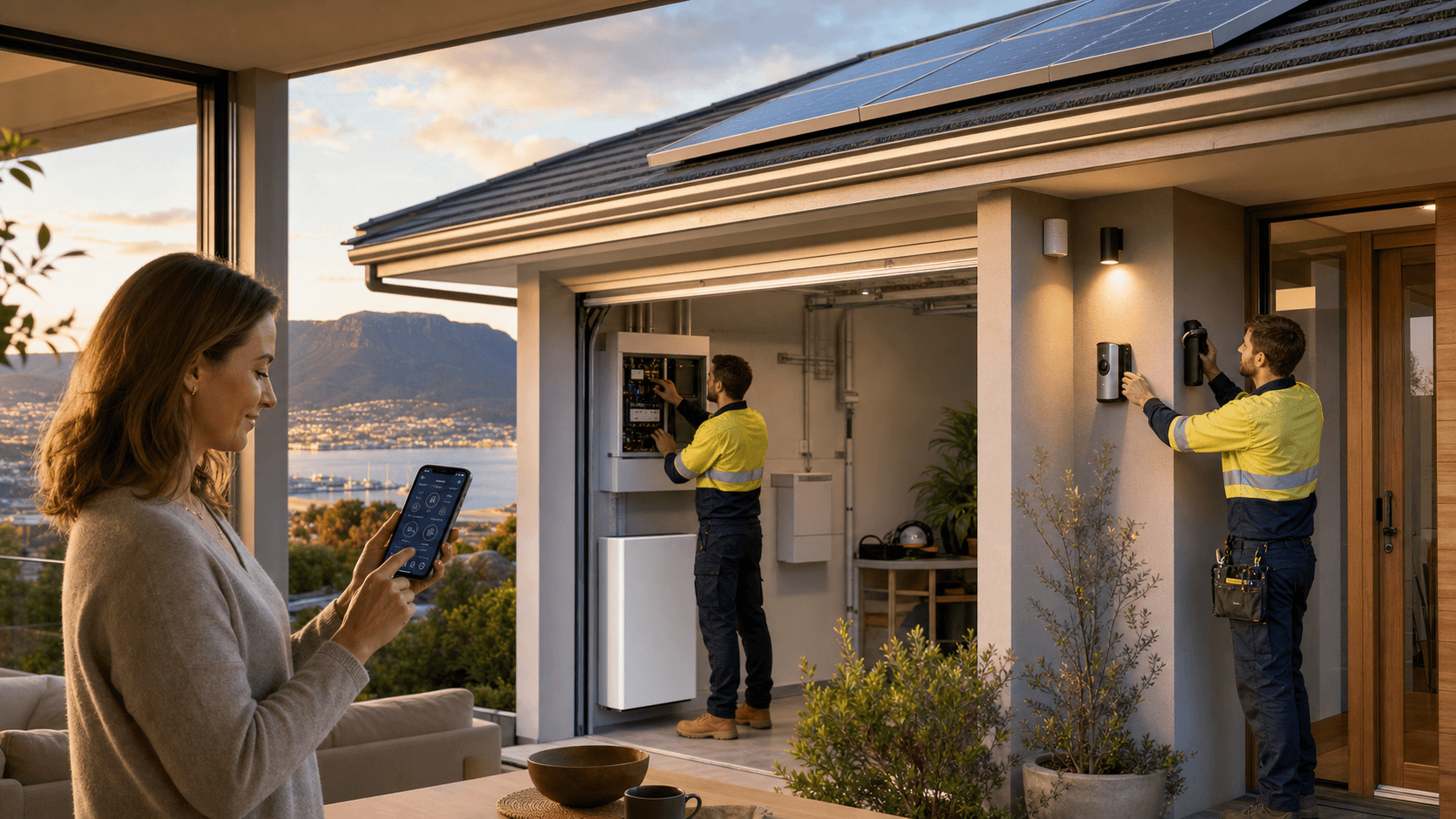
- Installation day with careful panel mounting, smart inverter position, safe wiring, checks, and testing
- Commissioning, monitoring app setup, clear handover, and post-install support
Winter can be a smart time to install, because your system is ready to go when the long, bright summer days arrive. Typical timeframes are short once approvals are in place, and work planning helps keep disruption low even in cold or wet weather.
Quick Answers to Common SolarEdge and Fronius Questions
Which is better in Hobart, SolarEdge or Fronius?
Neither is automatically better; the right choice depends on shading, roof shape, budget, and how much monitoring detail you want.
Are SolarEdge systems worth the extra cost in Tasmania's climate?
They can be, especially on shaded or complex roofs where optimisers can recover energy that a plain string system would lose.
Do I need panel optimisers if my Hobart roof has very little shading?
If your roof is open and north-facing, a well-designed Fronius string system will usually perform very well without optimisers.
How long do SolarEdge and Fronius inverters usually last in Southern Tasmania?
Quality inverters are designed to run for many years, and actual life depends on correct design, good installation, and a suitable mounting location.
Can I add a battery later with either SolarEdge or Fronius?
Yes, both can be set up to be battery-ready, although the exact battery models and wiring layouts are different for each brand.
Where should my inverter be installed to cope with Hobart weather?
Ideally in a shaded, dry, well-ventilated spot, such as a garage wall or external wall under cover, away from direct weather and harsh sun.
How do I choose a reliable SolarEdge installer in Hobart?
Look for a local team with experience in SolarEdge design and commissioning, clear communication, and a focus on tailoring systems to Tasmanian conditions.
What maintenance do inverters need in Tassie's coastal and cool conditions?
They mainly need a quick visual check now and then, keeping the area around them clear, and periodic professional inspections to confirm that connections and cooling are in good shape.
Get Started With Your Project Today
If you are ready to make the switch to smarter solar, our team at 4Front Services is here to help you plan the right system for your home or business. As a trusted SolarEdge installer in Hobart, we design and install solutions tailored to Tasmanian conditions. Talk with our local specialists about your goals, budget and timeline so we can recommend the best approach. To book a consultation or request a quote, simply contact us today.
With over 30 years of combined experience serving Tasmania, 4Front specialise in custom electrical and solar installations, heat pump systems, energy-efficient lighting design, and comprehensive energy audits. We also provide tailored heating, cooling, and energy efficiency solutions to suit your home and lifestyle.
Serving Greater Hobart & Southern Tasmania
0468 059 603
info@4frontservices.com.au
Shop 91/29 Channel Hwy, Kingston TAS 7050