Smart Home Automation in Hobart: Remote Control, Comfort and Security
Smart home automation in Hobart means linking your security, heating and cooling, solar, and energy monitoring into one system you can control from your phone, wherever you are. The core benefit is remote peace of mind and lower power bills, with every component selected and installed for Tasmanian wind, UV and coastal conditions.
Power prices keep rising, the weather swings from icy nights to bright sunny days, and many locals spend time away at work, at the shack or travelling. That mix makes old, manual systems feel out of date. People want homes that look after themselves, stay comfortable and keep watch when nobody is there.
Our focus is on bringing everything together as an integrated, future-ready system. With smart cameras, alarms, heat pumps, solar, batteries and EV chargers all working as one, your home becomes easier to manage, not more complicated. You can check in, make changes and see your energy use on a single screen.
There is also a timing factor. Tasmanian and Federal rebates tend to step down over time, and many schemes reassess around May, so planning ahead is essential to lock in higher incentives. Planning upgrades before winter helps secure stronger rebates, better installation dates and a more comfortable, secure home when the cold hits.
This authoritative guide walks through smart security and monitoring, energy upgrades like solar, heat pumps and insulation, and how to combine them for comfort, safety and savings under one smart home plan.
What Smart Home Automation Means in Hobart
Smart home automation in Hobart is the linking of devices like:
- Security cameras, video doorbells and alarms
- Smart locks and sensors
- Wi‑Fi heat pumps and zoned ducted systems
- Solar inverters, batteries and EV chargers
- Energy monitoring and smart lighting
All of these connect to a central app or hub, so your phone or tablet becomes the remote control for your whole home.
Tasmania brings some unique twists. Winters are cold, so heating loads are high. UV levels can be strong on clear days, which is good for solar but tough on plastic fittings and external cabling. Many homes sit on exposed hillsides or near the coast, where salt air and wind test cameras, fixtures and seals. Those local factors affect which gear is chosen, how it is mounted and how it is weatherproofed for long-term reliability.
Remote peace of mind is the heart of it. While you are at the shack or away for work, you can:
- Check live camera feeds and recordings
- Get a notification if a door opens or motion is detected
- Turn lights on at dusk to make the home look occupied
- Warm the living room before you get back
That can be a big relief for FIFO workers, frequent travellers or anyone with a holiday home.
When one local team designs and installs the whole setup, each part can talk to the others properly. That means fewer apps, better integration with Tasmanian power networks and equipment that is chosen to cope with local UV, wind, salt and cold over the long term.
Remote Security You Can Trust While You Are Away
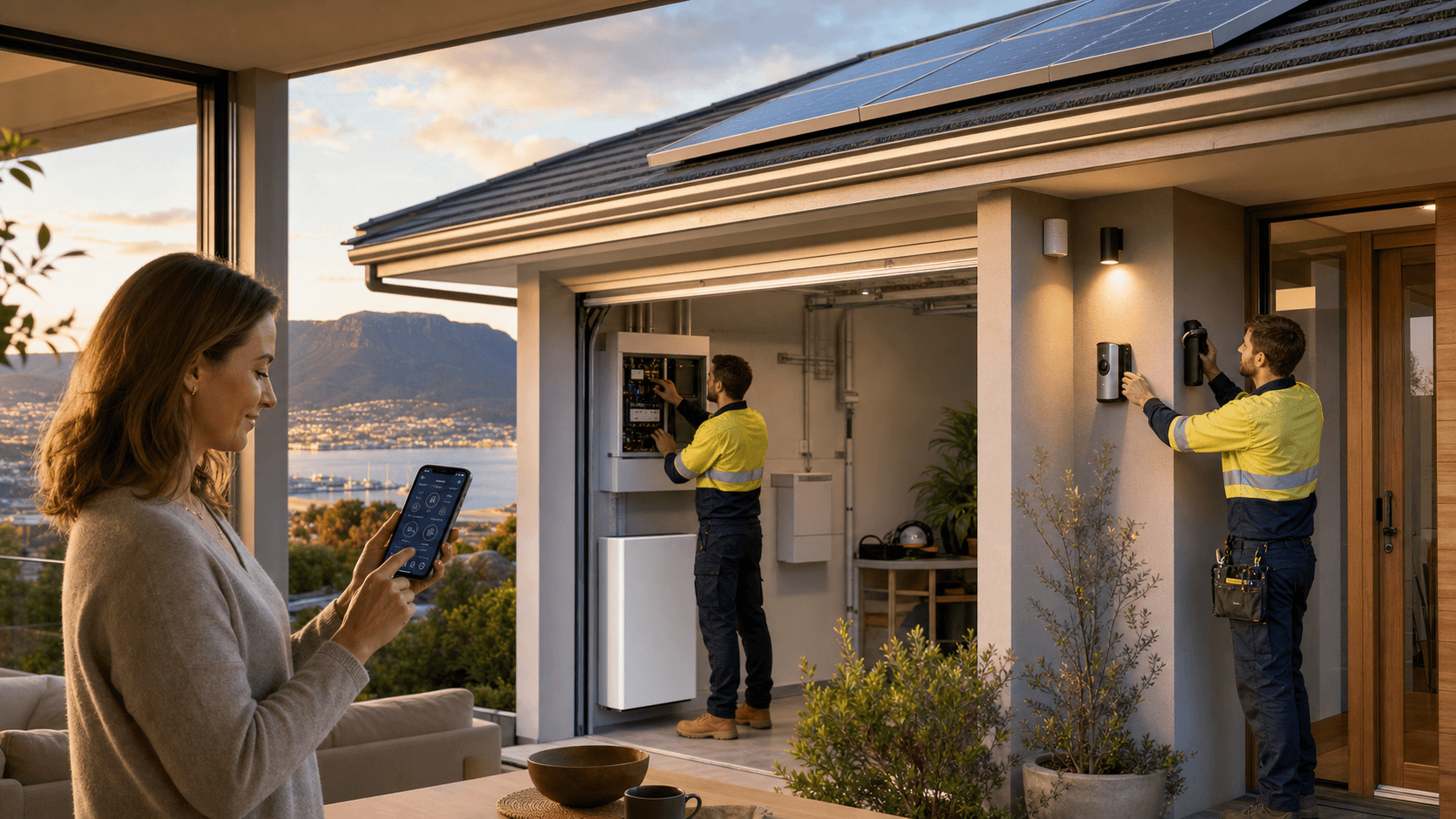
Remote peace of mind means you can see, control and secure your Hobart home from your phone at any time, and you get automatic alerts if something looks wrong. You do not need to wonder if you locked up or left a light on; you can just check and adjust settings in seconds.
Key smart security options include:
- Smart cameras and doorbells with motion alerts, night vision and weather ratings suited to Tasmanian rain, UV and wind
- Smart locks and access control so you can let in trades or guests without spare keys
- Alarms and sensors on doors, windows and internal areas
- Lighting that links to sensors, so lights turn on if there is movement outside at night
Hobart's coastal and hillside blocks get strong winds and sideways rain, which can cause blurry pictures, water ingress or shaky mounts if equipment is not chosen and installed well. Shorter winter days and low sun angles affect where cameras should sit for clear images and good night performance. Cabling must be protected from UV, salt and rodents, and power supplies need to be reliable for recording and alerts.
Privacy and data security matter too. Off-the-shelf gadgets often ship with default passwords or cloud settings that people never change. A professional setup will:
- Secure user accounts and passwords
- Set sensible recording and storage rules
- Configure alerts so you get useful notifications, not constant spam
- Place cameras in locations that respect privacy while still protecting entry points
Why Choose US for Remote Security and Smart Home Automation?
- Fully licensed local electricians and security installers
- Designs matched to Hobart sun paths, shade, UV exposure and coastal wind
- One app where possible, instead of a tangle of logins
- Systems planned so security, solar, heat pumps and EV charging work together
- Ongoing support if your needs, hardware or internet connection change
- Guidance on data security, passwords and privacy-friendly camera placement
Energy Smart Upgrades for Year-Round Comfort
The same smart home automation in Hobart that looks after your security can also manage heating, cooling and solar to keep you comfortable and reduce power use. That way, your home feels better to live in, and your bills are easier to control while you enjoy remote peace of mind about both comfort and cost.
Heat pumps are a key piece for Tasmanian winters. With smart controls you can:
- Use efficient reverse cycle or ducted systems sized for local cold snaps and coastal winds
- Pre-heat the home before you arrive, then let temperatures drift while you are out
- Avoid heavy use in peak tariff times if your plan supports that
- Set up zoning so bedrooms, living spaces and work areas only run when needed
Solar, batteries and EV chargers add another layer of control:
- Solar systems can be designed for softer winter sunlight, strong summer UV and variable cloud
- Batteries let you store daytime energy for evening use or for backup during storms and outages
- Smart EV chargers can be set to charge from excess solar first, then cheaper off-peak grid power
Insulation and draft sealing are quiet heroes. Without good insulation and sealing, even the best heat pump works harder than it needs to in Tasmanian wind and cold. Combining improved insulation, heat pumps and smart controls keeps warm air inside, cuts drafts and reduces overall run time.
Why Use an Integrated Approach for Energy Upgrades?
- All design and installation done by one Hobart-based team
- Experience with TasNetworks requirements and local approvals
- Integrated plans that consider solar, heat pumps, batteries, EV charging and insulation together, instead of as separate projects
- Systems tuned to Tasmanian UV exposure, wind, coastal air and typical winter conditions
- Fewer repeat site visits, scaffolds or lift equipment because cabling and hardware are coordinated
Typical Installation Steps for Smart Home Automation
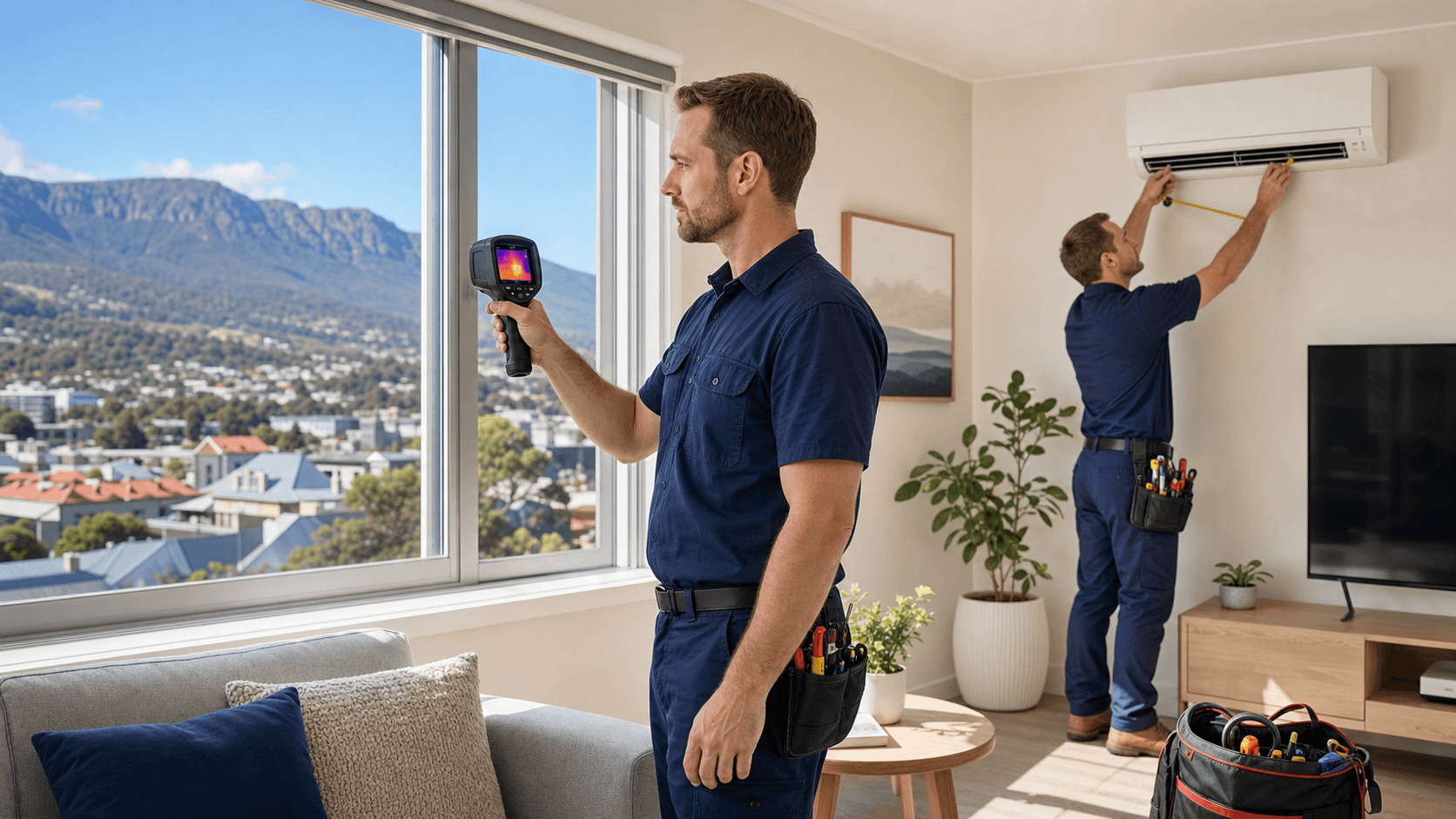
- Initial consultation and site assessment: review your home layout, internet connection, power usage and security concerns, with a focus on Tasmanian weather exposure and shading.
- System design and rebate planning: create an integrated plan for security, heat pumps, solar, batteries and EV charging, and map which Federal, State or council incentives apply before May.
- Proposal and timeline: present recommended equipment, staging options and an installation schedule that fits your budget and preferred timing before winter.
- Pre-wiring and preparation: run data and power cabling, upgrade the switchboard if needed, and plan antenna, camera and inverter locations for local wind, UV and salt conditions.
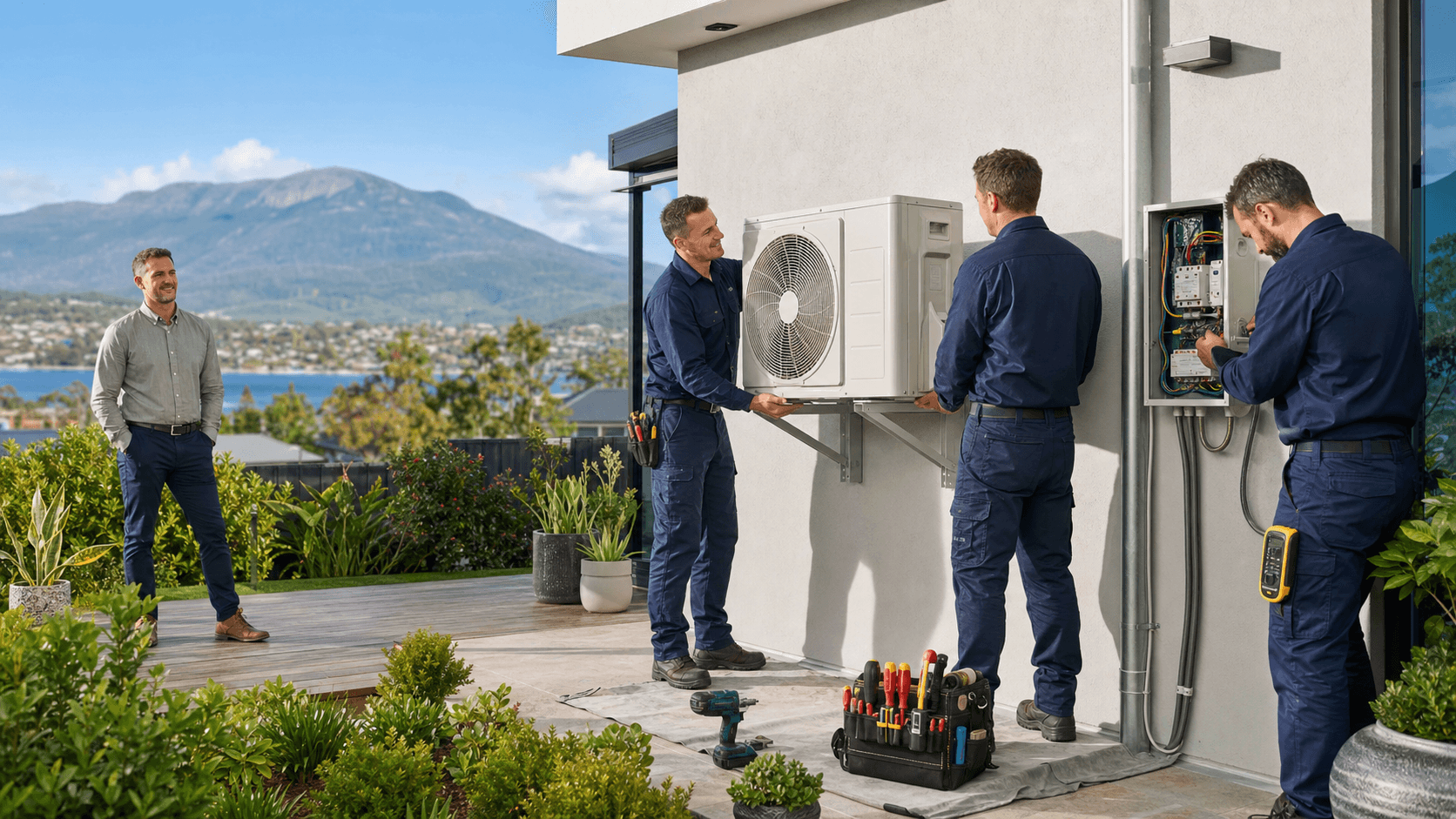
- Hardware installation: mount cameras, sensors, locks, heat pumps, solar panels, inverters, batteries and EV chargers to manufacturer specifications and local standards.
- System integration and testing: connect devices to the central app or hub, set up automations, test alerts, and verify performance under typical Hobart light and weather conditions.
- Handover and training: show you how to use the apps and wall controllers, explain how remote access works, and provide clear instructions for older family members.
- Follow-up support: adjust settings, expand the system over time and assist with any changes to tariffs, rebates or internet services.
Locking in Rebates Before May for Maximum Savings
Rebates and incentives for solar, heat pumps and other upgrades are usually based on schemes that step down over time. Many programs review or tighten criteria around May, which is why locals often treat the months before that as the key window to act.
Common incentive types include:
- Federal support for solar and sometimes batteries
- State-based heat pump and energy efficiency schemes
- Council or regional offers for insulation or other upgrades from time to time
Acting before May can help in a few ways:
- Higher certificate values and larger rebates for solar and heat pumps
- Better choice of installation dates before winter bookings fill up
- Ability to plan combined projects, like solar plus heating plus security cabling, which may reduce repeat labour or access equipment
A good design process will:
- Assess your home or business and identify which rebates may apply
- Suggest bundles that tick boxes across several schemes at once
- Handle paperwork, compliance and metering changes so you are not chasing forms or approvals
Upgrade paths that suit different situations might include:
- Remote security plus heat pump, suited to renters and smaller homes where structural changes are limited
- Solar plus battery plus EV charger, for owners with higher usage and longer-term plans
- Full smart home automation in Hobart, tying together security, solar, batteries, EV charging and smart comfort controls under a common plan
Taking action before May locks in stronger incentives and gives you time to design a whole-of-home solution instead of rushing separate jobs.
Your Smart Hobart Home Questions Answered
What is smart home automation in Hobart and how is it different from generic devices?
Off-the-shelf smart gadgets often work fine on their own, but they are rarely designed as a joined-up system. A professionally planned setup for Hobart considers local power networks, NBN or alternative internet, building styles and weather, and connects everything into a single, reliable whole that delivers remote peace of mind.
Can you start with smart security now and add solar and heat pumps later?
Yes, many people stage their upgrades. The key is to think ahead, for example by running extra cabling or leaving space in the switchboard, so later solar, batteries or EV chargers slot in without major changes.
Will smart cameras and Wi‑Fi devices cope with Hobart's wind and coastal weather?
They can, if the right equipment and mounting are used. Good IP ratings, solid brackets, sealed cable entries, UV-resistant conduit and corrosion-resistant fixings all help. Wi‑Fi planning also matters, especially in brick, weatherboard or multi-storey homes where signals can be patchy.
Are smart systems hard to use for older family members?
They do not have to be. Simple apps, wall-mounted controllers, clear icons and basic automation routines, such as lights that come on at set times, mean people can use the system in the way that suits them. A proper handover and clear instructions make a big difference.
How long do rebates and incentives usually take to process?
Timeframes vary between programs, but there is often a lag between paperwork and final approval. Starting well before May helps avoid rush periods and makes it easier to align approvals, product ordering and installation dates.
Take Control of Your Home Before the Next Winter
With a well-designed smart home, you can check your security, control your heating and cooling, and keep an eye on energy use from anywhere. When those systems are chosen and installed for Hobart conditions, they work more reliably and are easier to live with year after year.
The months leading into winter are the ideal time to plan, while rebates are still stronger, installer schedules are more flexible and you have time to think about integrated upgrades instead of quick fixes. Acting before May with a thoughtful, whole-home approach means your security, comfort and energy systems grow with you as technology and incentives change, giving you lasting remote peace of mind.
Get Started With Your Project Today
If you are ready to upgrade your home security and everyday comfort, our team at 4Front Services can help design a system tailored to the way you live. Explore how our smart home automation in Hobart can give you greater control, visibility, and peace of mind. For personalised advice or to request a quote, simply contact us and we will guide you through the next steps.