Off-Grid or Hybrid Solar for Hobart Homes: What's Best for You?
Off-grid and hybrid solar systems are two main ways Hobart and southern Tasmanian homes can use solar, batteries and smart design to cut bills and improve energy security. Off-grid systems provide complete independence from the grid, while hybrid systems keep you connected but add a battery for strong bill savings and backup during outages.
With electricity prices rising and more wild weather hitting Southern Tasmania, many Hobart homeowners are rethinking how much they rely on the grid. Some want full independence on a rural property, others just want the lights, fridge and Wi-Fi to stay on when a storm hits.
Most homes sit somewhere between three main choices:
- Stay grid-connected with a hybrid system
- Go fully off-grid
- Pick a "minimum backup" setup that gives key circuits power in an outage
Grid reliability around Greater Hobart is usually good, thanks to TasNetworks, but it can still drop during storms or bushfire events. On bush blocks in the Huon or Channel, or in parts of the Derwent Valley, grid access can be weak, expensive to connect or not available at all, which can push the choice strongly toward off-grid solar systems in Hobart.
How Off-Grid Solar Systems Actually Work in Hobart
An off-grid solar system in Southern Tasmania is a complete stand-alone power supply. Your solar panels, battery bank and backup generator work together to deliver 100 percent of your electricity without any poles and wires to the property.
Because Hobart has shorter winter days and plenty of cloudy spells, an off-grid design needs to be sized quite carefully:
- More solar panels to cover shorter, weaker winter sun
- Larger battery banks so you can get through long, cold nights
- A generator sized to carry you through long periods of cloud, rain and even snow in some areas
Living off-grid usually means being a bit more aware of what is turned on. High-load appliances like:
- Heating
- Hot water
- Electric vehicle charging
can use a lot of energy very quickly. Many off-grid households learn to run heavy loads during sunny hours in winter, or they back them up with wood heating or gas where that suits the home.
Pros of going fully off-grid:
- Complete energy independence
- No grid outages or future network charge rises to worry about
- A strong option for remote properties where grid connection is hard or not affordable
Cons to keep in mind:
- Higher upfront cost than most grid-connected options
- Needs good design, quality gear and regular checks
- Some reliance on a generator during long, gloomy winter stretches
Hybrid Solar Systems: the Sweet Spot for Most Hobart Homes
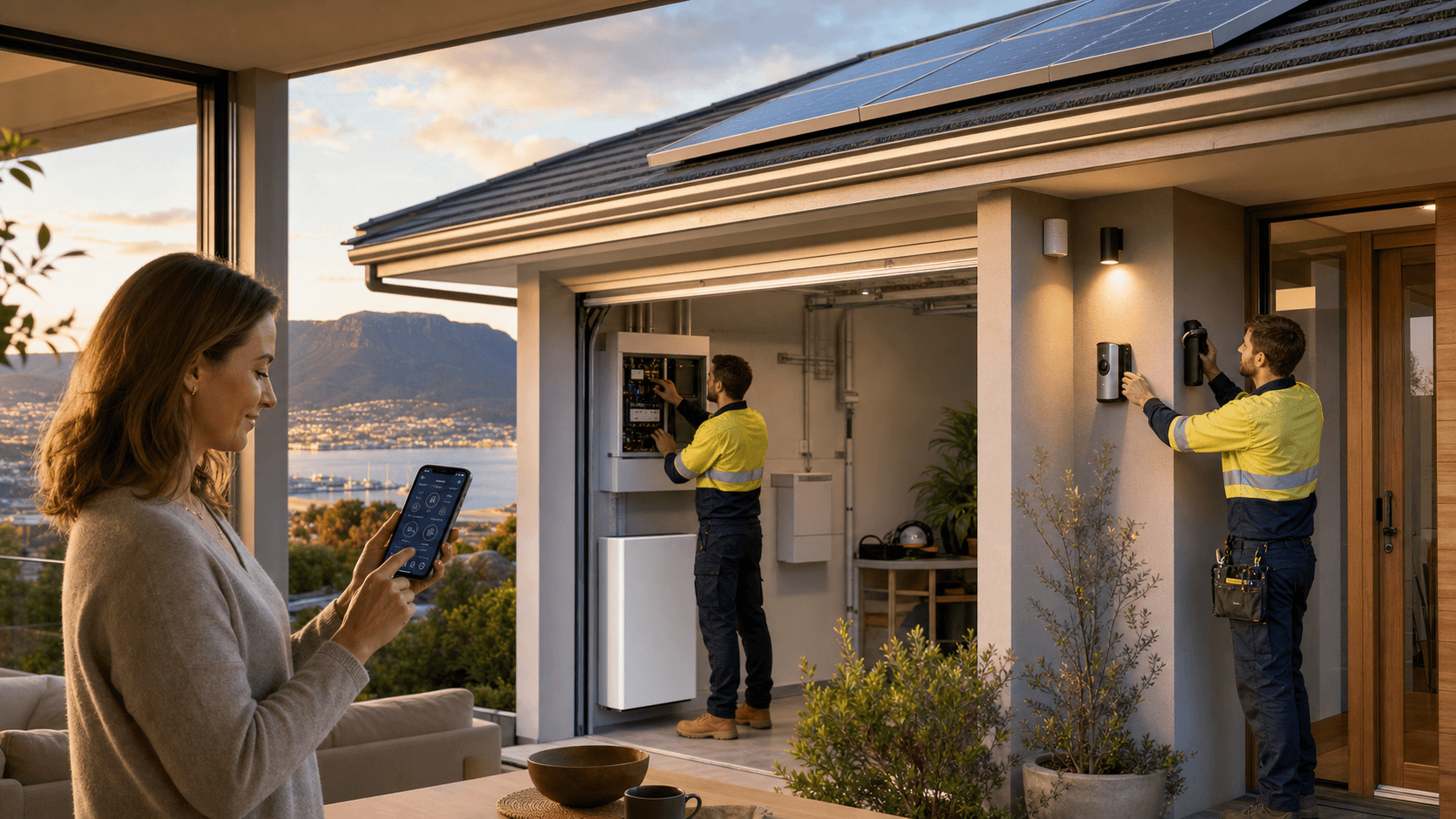
A hybrid solar system is still grid-connected, but it includes a battery so you can store your own solar power and keep parts of the home running during a blackout. You get the safety net of the grid without giving up the control that comes with solar and storage.
On a normal day, a hybrid system works like this:
- Panels power your home first
- Extra solar charges the battery
- Any remaining surplus goes back to the grid for a feed-in credit.
At night or in poor weather, the battery steps in first, then the grid fills the gap if needed.
Hybrid systems are popular in Hobart suburbs because they can:
- Keep fridges and freezers running in outages
- Protect NBN gear and phone chargers
- Support medical equipment or home office gear
- Run some heating in one or two rooms during a storm
Good points of hybrid solar:
- Lower cost than full off-grid setups
- Strong bill savings thanks to self-consumption and feed-in tariffs
- Easier approvals and simpler to design than off-grid
- Flexible sizing and easier future upgrades
Things to watch:
- You still pay some network charges and depend on grid uptime
- Not every hybrid system can run the whole house in a blackout, so critical load design is very important
Minimum Backup Options for Essential Power
"Minimum backup" means planning your battery system to keep only the important circuits running when the grid fails, not the entire home. It is a smart middle ground between no backup and a full off-grid power system.
For many Hobart homes in places like Kingston, Glenorchy or Sorell, the grid is usually fine but storms and high winds can still knock power out. In these homes, a minimum backup setup is often built around:
- Fridge and freezer
- Wi-Fi, NBN and a few power points
- Key lighting
- Maybe a small heat pump or panel heater in a main living area
Typical "essential loads" do not include:
- Whole-of-house heating
- All power points
- EV chargers
- Large hot water systems
By being picky about what stays on, you can:
- Keep costs down compared to full-home backup
- Still protect food, comfort and communication
- Cover most real-world Tasmanian outage needs
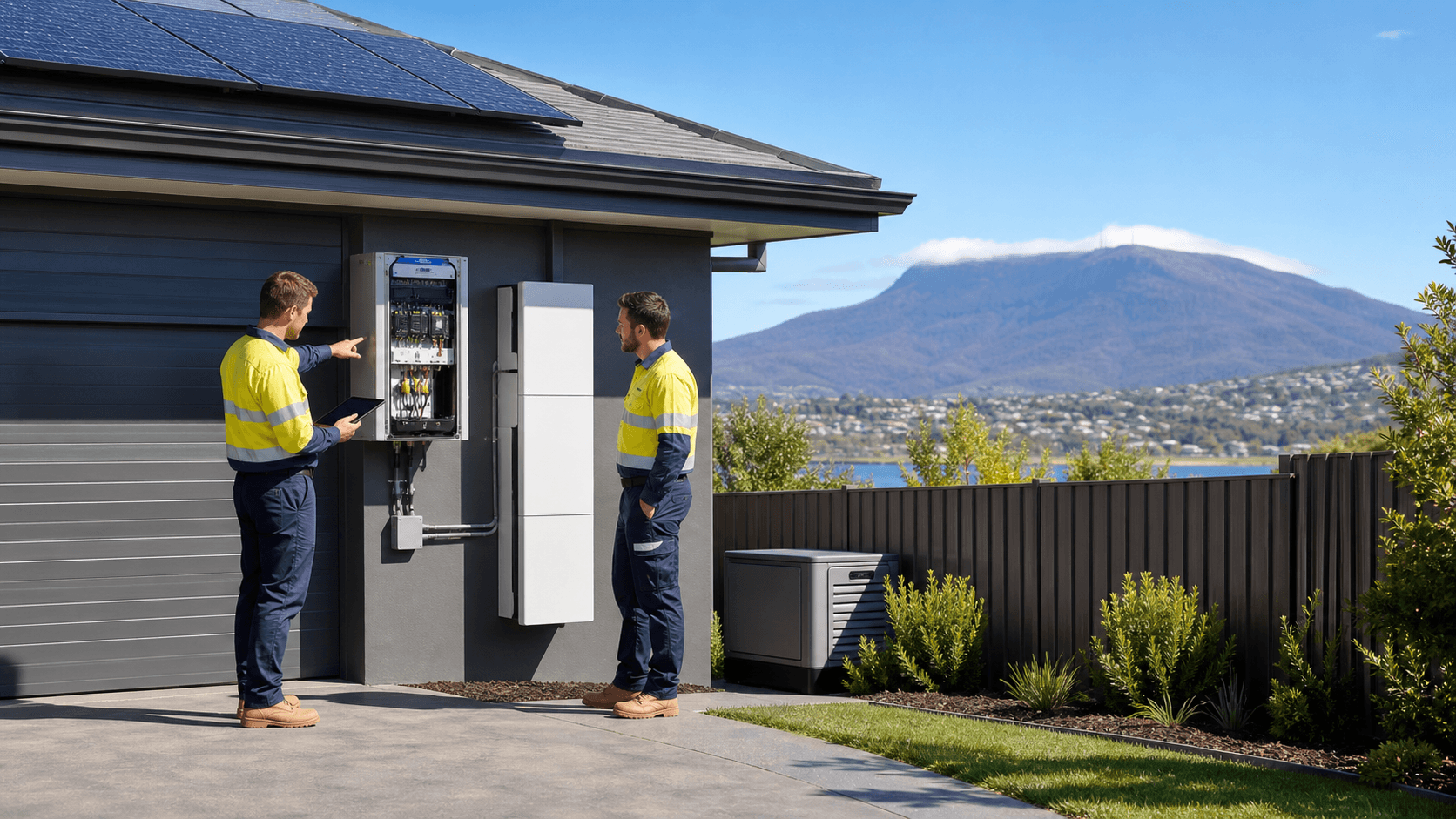
Because these systems are still grid-connected, safe switchboard design is very important. Correct isolation switches, changeover gear and compliance with Australian and Tasmanian standards all matter to keep you and lines workers safe.
Cost and Resilience Trade-Offs for Hobart's Climate
Solar and battery options in Hobart sit on a spectrum, both for cost and for how resilient they are when the grid goes down.
Roughly, the order from lowest investment to highest is:
- Standard grid-tied solar with no battery
- Hybrid solar with no backup during outages
- Hybrid solar with "essential loads" backup
- Hybrid solar with full-home backup
- Full off-grid solar with generator support
Heating is a big piece of the puzzle. Hobart's cool winters and long nights mean:
- Systems often need more winter-focused solar capacity
- Battery sizing must consider frequent heater use and longer overnight runs
- Some homes are better off keeping a wood heater or gas unit as backup, instead of trying to power all heating from batteries alone
On payback and value over 10 to 15 years, you are weighing:
- Power bill savings
- Feed-in tariff income
- Battery replacement cycles
- Generator fuel and maintenance for off-grid homes
- The value you place on comfort and uptime when the grid fails
Local site factors also shape your design:
- Roof orientation and tilt, many Hobart homes suit north or north-west layouts for better winter sun
- Shading from hills, tall trees or neighbouring buildings
- Frost and occasional snow in parts of the Derwent Valley or Huon
A good in-house design will tune panel layout, inverter choice and battery placement for these local conditions.
Why Choose 4Front for Off-Grid & Hybrid Solar in Hobart
- Local Hobart and Southern Tasmanian experience with off-grid, hybrid and backup systems
- Designs focused on Tasmanian winters, long nights and storm-related outages
- Tailored solutions for suburbs, regional towns and remote bush blocks
- In-house electrical and solar expertise, including switchboard upgrades and safety compliance
- Clear advice on when off-grid, hybrid or minimum backup makes most sense for your home and budget
- Support with feed-in tariff approvals, TasNetworks requirements and system monitoring
- Ongoing service, maintenance and optimisation for long-term performance
Installation Steps: How 4Front Designs and Installs Your Ideal System
- Initial assessment and consultation, Review of recent power bills, Discussion of your heating, hot water and any EVs, Talk through comfort, blackout concerns and future plans (home office, extensions, extra family members)
- Site and switchboard check, Roof orientation, tilt and shading assessment for Hobart's sun angles, Access, structural considerations and safety, Switchboard condition and any upgrades needed for compliance
- System design and options, Off-grid, hybrid or minimum-backup recommendations based on your goals, At least two clear options (e.g. hybrid with essential backup vs larger hybrid or staged path toward off-grid for rural blocks), Sizing of panels, batteries and (if needed) generator for Tasmanian winter performance
- Installation and setup, Safety and isolation checks, Panel layout to suit Hobart's winter and summer sun, Battery and inverter placement for safe, dry, cool operation, Electrical, solar and monitoring setup so you can see what is going on
- Testing, commissioning and handover, System testing and compliance checks, Handover walkthrough so you understand how to use and monitor your system, Guidance on using appliances and backup modes during Tasmanian storms or outages
- Ongoing support, Monitoring and performance checks, Maintenance and warranty support, Seasonal tips, like winter usage adjustments or how often to test a generator on an off-grid system
FAQs: Off-Grid vs Hybrid Solar for Hobart Homes
What is the main difference between off-grid and hybrid solar for Hobart homes?
Off-grid solar runs your whole home with no grid connection at all, using panels, batteries and a generator. Hybrid solar keeps you on the grid but adds a battery so you can save on bills and still have backup in blackouts.
Are off-grid solar systems in Hobart worth the extra cost?
They can be worth it on remote or bush properties where grid connection is poor or very costly. In town or suburbs, many people find a well-sized hybrid system better value.
How big does a battery need to be for a typical Hobart home?
It depends on your night-time use and what you want running in a blackout. Many homes size batteries to cover evening and early morning loads plus a set of essential circuits.
Can a hybrid solar system run my whole house during a blackout?
Yes, but only if it is designed and wired for full-home backup. Many systems are set up for essential loads only, so design choices at the start are very important.
What is the best option if I have unreliable power but access to the grid?
A hybrid solar system with essential backup is usually the best balance of cost, savings and resilience. It keeps key appliances and devices running without paying for full off-grid gear.
How does Hobart's winter weather affect solar performance and battery sizing?
Shorter days and more cloud mean you need more panel capacity per kilowatt-hour of load, and often a larger battery to get through long nights. Good design focuses on winter needs first, then checks summer will work well too.
Do I still get a feed-in tariff with a hybrid solar system?
Yes, any surplus solar that your home and battery do not use can still be exported to the grid for a credit, as long as your system is approved for export.
How long do batteries last in Southern Tasmania's climate?
Cooler temperatures are usually kind to modern lithium batteries, and many last for many years when correctly installed and used. Actual life depends on how hard they are cycled and how they are maintained.
What maintenance do off-grid solar systems in Hobart need each year?
They need basic checks on panels, wiring, battery health and inverter performance, plus regular testing and servicing of the generator. Some off-grid homes also keep an eye on ventilation and dust around the equipment.
How do I choose between a generator and more batteries for backup?
It comes down to how often you expect long outages or long cloudy stretches, and how much you want to spend upfront. Many off-grid systems use a mix of both so the generator only runs when it really needs to.
Get Started With Your Project Today
If you are ready to design a reliable, independent power setup for your property, we can help you plan and install tailored off grid solar systems in Hobart. At 4Front Services, we take the time to understand how you live and what you need your system to deliver, so you get practical performance, not guesswork. Reach out to us today and we will walk you through your options, costs and timelines. If you would like to book a consultation or ask a question, simply contact us and we will respond promptly.
With over 30 years of combined experience serving Tasmania, 4Front specialise in custom electrical and solar installations, heat pump systems, energy-efficient lighting design, and comprehensive energy audits. We also provide tailored heating, cooling, and energy efficiency solutions to suit your home and lifestyle.
Serving Greater Hobart & Southern Tasmania
0468 059 603
info@4frontservices.com.au
Shop 91/29 Channel Hwy, Kingston TAS 7050