When a Heat Pump Outperforms Solar in Hobart Homes
A hot water heat pump is an efficient electric system that moves heat from the outside air into your hot water tank, often delivering lower and more predictable running costs than traditional systems. In Hobart and Southern Tasmania, where winter sun is limited and roofs are often shaded, a well-chosen heat pump can outperform solar hot water for year-round reliability, comfort and bill savings.
Authoritative Guide: Heat Pump vs Solar Hot Water in Hobart
Hot water is usually one of the biggest power users in a Hobart home, so choosing the right system really matters. In our cool, often cloudy climate, a well-chosen hot water heat pump in Hobart can often beat traditional solar hot water on running cost consistency, reliability and comfort, especially through winter.
For many Southern Tasmanian homes, a quality heat pump gives you steady hot water, lower bills compared to an old electric cylinder, and fewer changes to your roof. Short winter days, regular cloud and older, shaded roofs in many suburbs mean roof-mounted solar hot water is not always working at its best, right when you need it most.
The main benefits homeowners usually notice are:
- Reliable hot water on frosty mornings
- More predictable power bills across the year
- No large collectors or extra penetrations on the roof
How Hot Water Heat Pumps Actually Work
A hot water heat pump uses electricity in a clever way. Instead of making heat directly like a standard electric cylinder, it moves heat from the outside air into the water, a bit like a fridge running in reverse.
Here is the simple version of how it works:
- A fan pulls in outside air
- A refrigerant absorbs heat from that air
- A compressor squeezes the refrigerant to raise its temperature
- That heat is passed into the water in your storage tank
Because the system is moving heat instead of creating it from scratch, it can give you more heat energy than the electricity it uses. This is where the Coefficient of Performance, or COP, comes in. If a system has a COP of 3, that means for every unit of electricity it takes in, it can deliver about three units of heat into your water. In cooler climates like Hobart, that kind of efficiency can make a big difference to running costs.
Most hot water heat pump systems have:
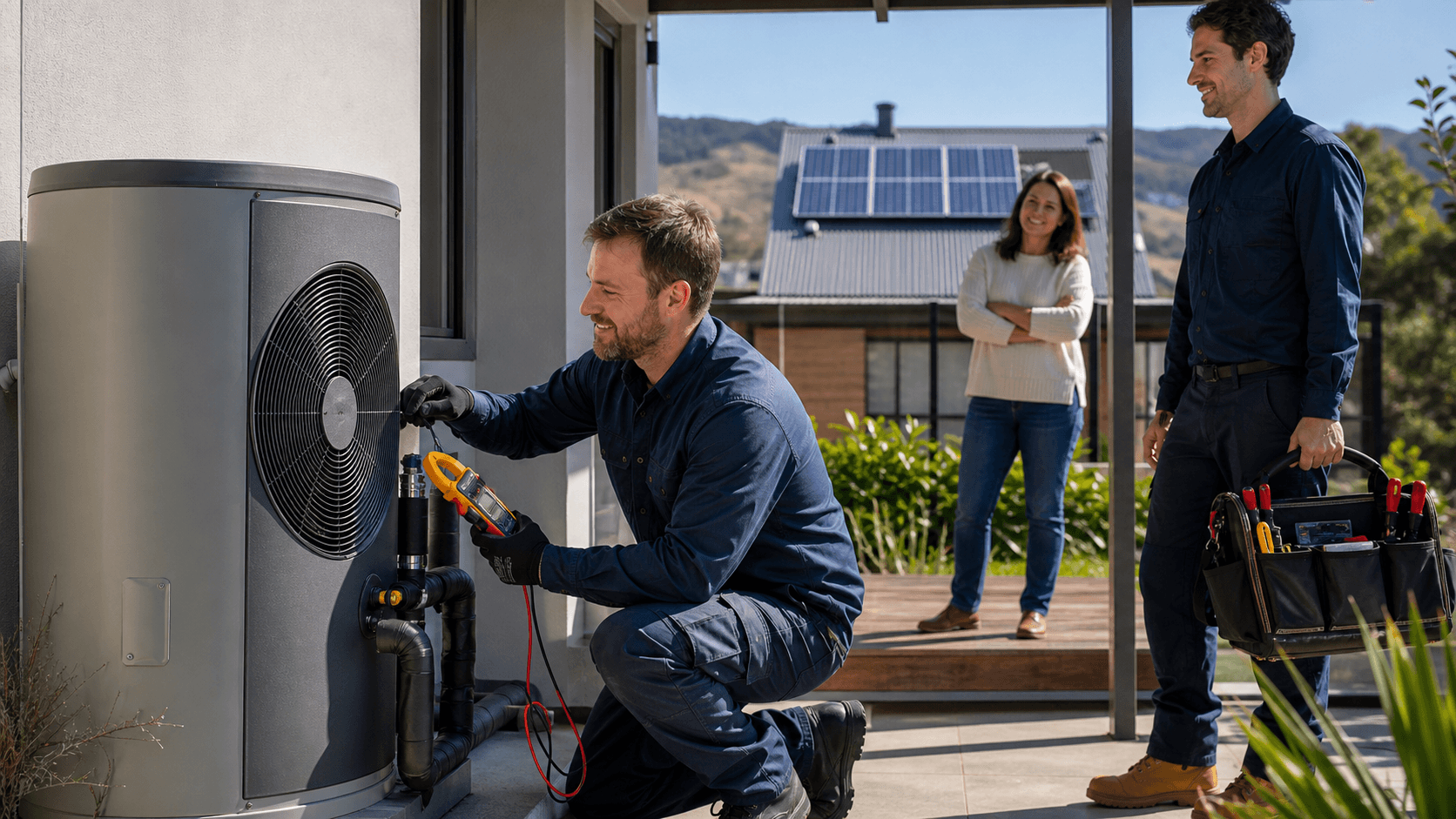
- An outdoor unit with the fan and compressor
- A storage tank, often ground-mounted
- A controller to manage temperatures and timing
- Optional timers to line up with off-peak power periods
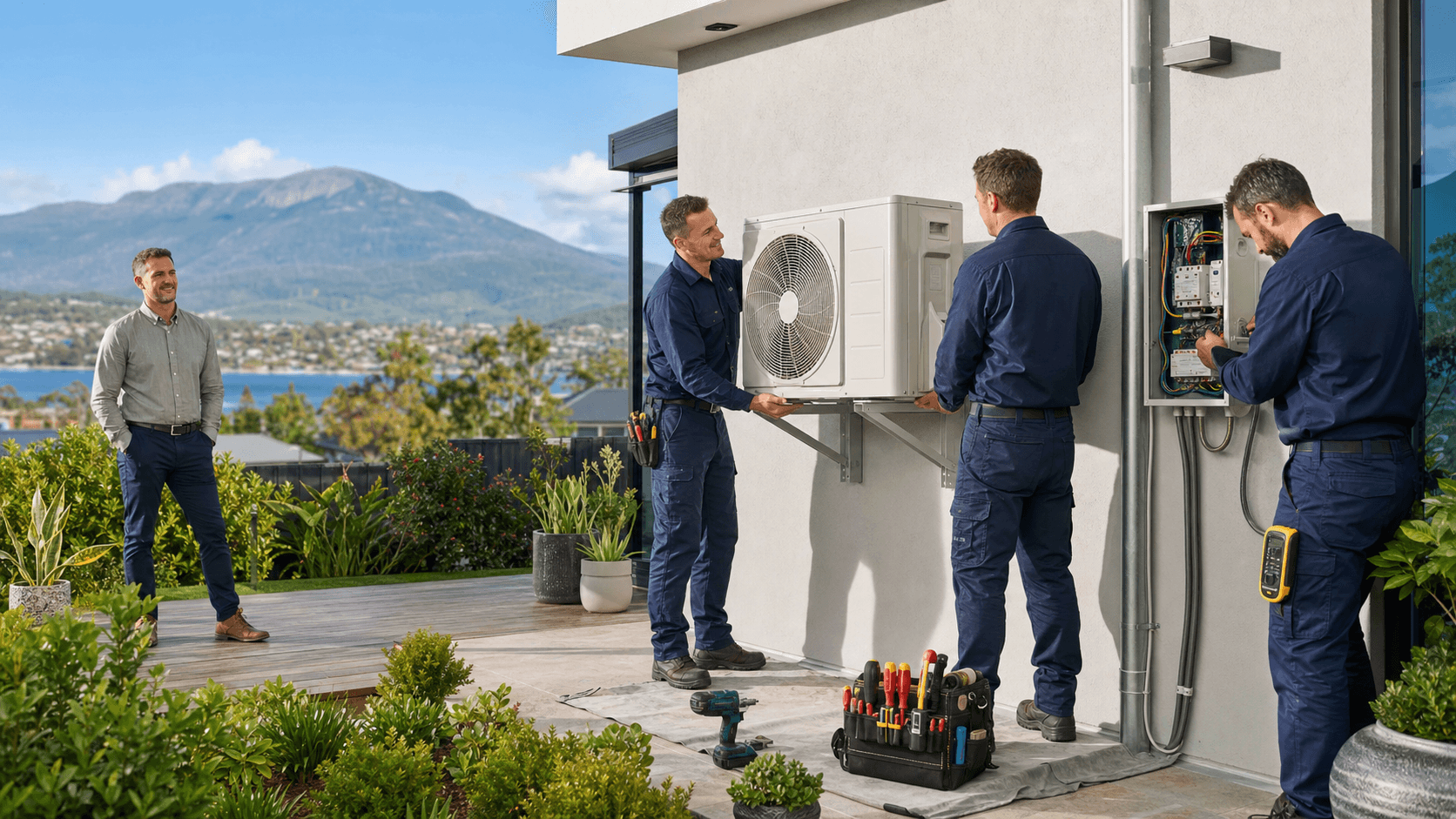
On a typical suburban Hobart block, placement is usually along an outside wall or near the existing cylinder location. Noise is often compared to a small outdoor AC unit. For most homes, the goal is to place it where:
- Air can flow freely around the unit
- It is away from bedroom windows where possible
- Access for servicing is simple
Tasmanian Climate and Local Roof Factors
Hobart's climate is beautiful, but it is not always friendly to solar hot water. In winter, the sun sits low in the sky, days are short and clouds and fog are common. Many older suburbs have large trees, chimneys and nearby buildings that shade roof areas, especially on the north side.
All of that means solar hot water collectors may not get the strong, direct sunshine they need right when households are having hot showers and running washing and dishes. You can end up needing regular electric boosting, which eats into the savings you hoped for.
A hot water heat pump in Hobart does not depend on clear sunshine. It can pull heat from the air even when the sky is overcast. While output will vary a bit with temperature, performance across the seasons is usually more predictable than relying mainly on the sun.
You can:
- Set the system to run in the warmer parts of the day, which helps efficiency
- Use timers to line up with off-peak tariffs or controlled load
- Keep your north-facing roof space free for solar PV panels
Roof layout is another big factor locally. Many homes in Greater Hobart have older roofing, tricky pitches, heritage features or limited north-facing area. In those cases, it often makes more sense to keep the prime roof space for PV, and let a ground-level heat pump handle your hot water needs.
Running Costs, Rebates and Payback in Southern Tasmania
When comparing systems, there are two main costs to think about: what you spend upfront and what you pay to run the system over time. Traditional electric cylinders usually have a lower purchase cost but higher power use. Solar hot water can lower running use when conditions are right, but performance is patchy in winter and you still need a backup element.
A hot water heat pump usually sits in the middle. While the purchase cost is generally higher than a basic electric cylinder, many homeowners find the lower energy use over time can offset that difference, especially when replacing an older, less efficient system.
You can often improve the value by:
- Running the heat pump on an off-peak or controlled load tariff
- Using built-in timers so it heats water when power is cheaper
- Coordinating with any existing solar PV so it runs when your panels are producing
There are also incentives that may apply to efficient hot water systems in Southern Tasmania, including:
- Small-scale Technology Certificates (STCs)
- Energy-efficiency programs that encourage upgrades to efficient hot water
These schemes can reduce upfront cost and shorten the payback period, but the exact benefit depends on the system chosen and current program settings.
Choosing the Right Heat Pump System for Your Hobart Home
Not every hot water heat pump suits every Hobart home. When we design a setup, we look at:
- Household size and how many showers and baths are typical
- Whether you prefer quick, short showers or longer ones
- Where your current hot water cylinder is located
- Available outdoor space and access to power
- Any existing solar PV, and your wider energy plans
Good sizing helps avoid running out of hot water or over-spending on a unit that is larger than you really need.
Why Choose Us
Why choose a local, Hobart-based team like ours for this kind of work?
- We understand how heat pumps behave in cold, frosty conditions
- We provide in-house design, installation and aftercare across Greater Hobart and Southern Tasmania
- We can consider your switchboard, solar PV, heating, cooling and lighting so your home works as a whole
Installation Steps
Typical installation steps for a hot water heat pump include:
- On-site assessment of your current system, roof layout and switchboard
- Recommendation of a unit size, tariff and placement that suits your home
- Professional installation, testing and commissioning
- Clear explanation of the controller, timers and recommended settings
Q&A: Hot Water Heat Pumps in Hobart Homes
What is the best location for a hot water heat pump in Hobart?
Usually in a sheltered outdoor area with good airflow, close to existing plumbing and power, and away from bedroom windows where possible. Side paths, yards or near the current cylinder spot often work well.
Will a hot water heat pump still work well on frosty winter mornings?
Yes, quality units are designed to run in cold conditions, including frosty mornings. They may run a bit longer to heat the same amount of water, but they keep working when solar hot water collectors are struggling.
How noisy are hot water heat pumps and will my neighbors hear it?
Most units sound similar to a small outdoor AC unit. With good placement and installation, noise is usually not an issue for neighbors on typical suburban blocks.
Should I choose solar hot water or a hot water heat pump if I already have solar panels?
Many homeowners with solar PV prefer a heat pump, as it keeps roof space free for panels and can be set to run when the PV system is producing. The best choice depends on your roof layout, shading and hot water use.
How long does installation take and will I be without hot water?
Most changeovers are completed within a day. There may be a short period without hot water while the old system is removed and the new one is connected.
How long do hot water heat pumps last and what maintenance is required?
Lifespan depends on the brand, water quality and use, but with regular checks and servicing they can provide many years of reliable service. Maintenance usually involves simple inspections, cleaning air inlets and checking valves.
Can a hot water heat pump help me move towards an all-electric, gas-free home?
Yes, pairing a hot water heat pump with efficient heating, cooling and induction cooking is a common step toward going all-electric. When combined with solar PV, it can help cut your reliance on other fuels.
Take Control of Your Winter Power Bills in Hobart
For many Hobart homes, a well-sized hot water heat pump offers lower and more predictable bills than solar hot water, especially through long, cold winters when sunshine is unreliable. It gives you steady hot water, works well with modern solar PV systems and avoids the challenges of older or shaded roofs.
If your electric cylinder is ageing, or you are planning a broader energy upgrade, this is a good time to look closely at your hot water options and how they fit into your whole home setup.
Upgrade Your Hot Water Efficiency With Confidence
If you are ready to cut your energy bills and enjoy more reliable hot water, we are here to help you choose and install the right hot water heat pump in Hobart for your home. At 4Front Services, we assess your property, explain your options clearly and handle the entire setup so you can get better performance with less hassle. Reach out to our team today via our contact page to book a quote or ask any questions you have about upgrading your hot water system.
With over 30 years of combined experience serving Tasmania, 4Front specialises in custom electrical and solar installations, heat pump systems, energy-efficient lighting design, and comprehensive energy audits. We also provide tailored heating, cooling, and energy efficiency solutions to suit your home and lifestyle.
Serving Greater Hobart & Southern Tasmania.
0468 059 603.
info@4frontservices.com.au.
Shop 91/29 Channel Hwy, Kingston TAS 7050.