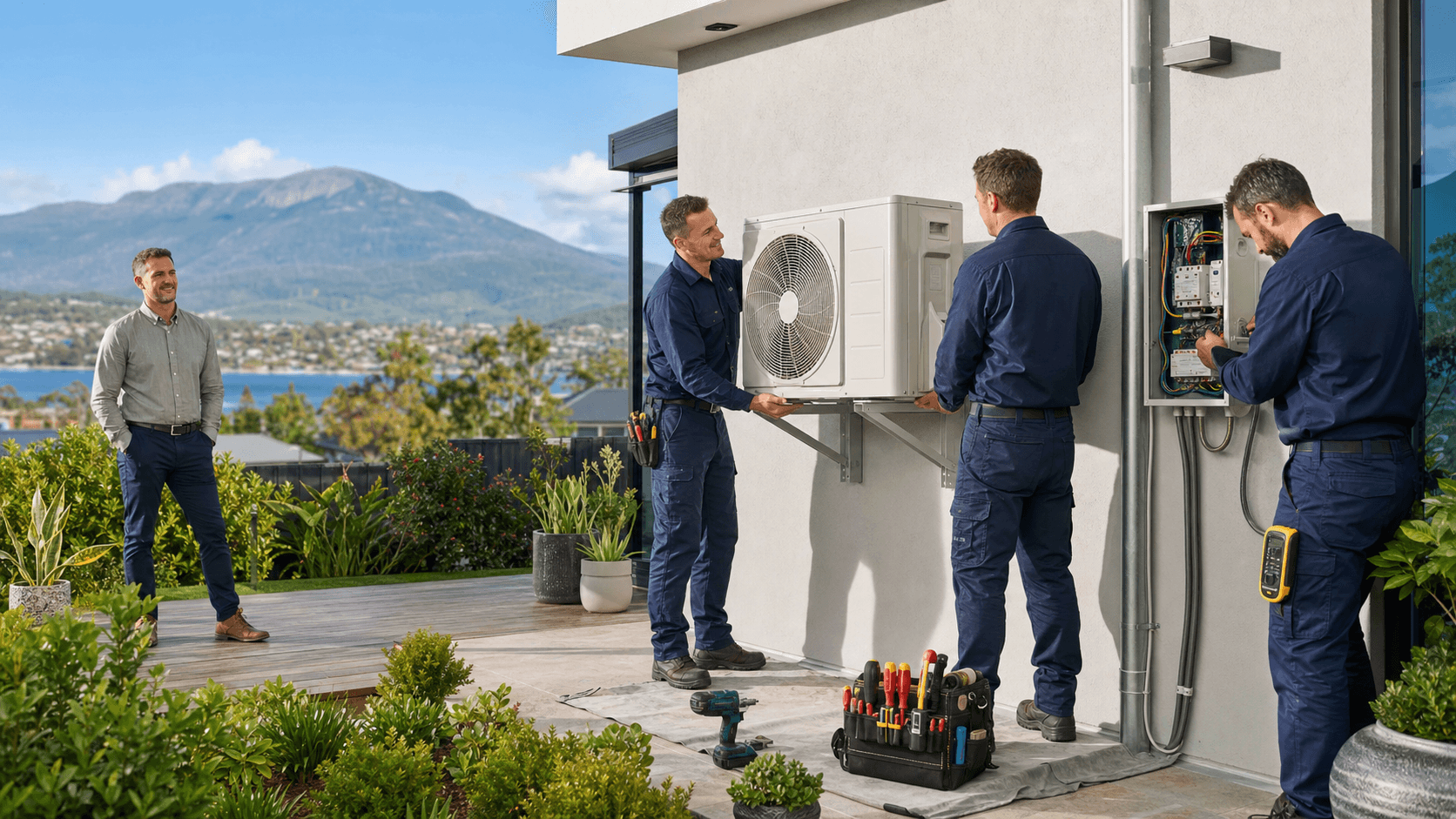
Heat pump installation in Hobart is the process of designing and fitting an efficient reverse-cycle system that keeps your home warm in winter and cool in summer. The right system, correctly sized for Tasmanian conditions, delivers lower running costs, quieter operation, and reliable comfort through Hobart's long, damp winters.
Authoritative Guide: Heat Pump Installation in Hobart
Staying warm through a Hobart winter is much easier with a well-designed heat pump system. A modern heat pump takes heat from the outside air, even when it feels freezing, and brings it inside to keep your home comfortable, efficient, and quiet through long, damp months.
When a heat pump installation in Hobart is planned properly, you get lower running costs than older electric heaters, more even temperatures from room to room, and better control over humidity. With sub-zero nights, frosts, and coastal winds across Greater Hobart and Southern Tasmania, local design details like outdoor unit placement, defrost performance, and drainage matter a lot more here than they do in milder mainland climates.
Why Choose 4front for Heat Pump Installation in Hobart
Local cold-climate design expertise for Hobart's frosty, coastal winters
In-house heat load assessments tailored to Tasmanian homes and building styles
Careful outdoor unit placement for low noise, low vibration, and reliable drainage on hilly or tight blocks
Smart control setup for remote peace of mind and easier winter energy management
Guidance on current-year Tasmanian and federal rebates, tariffs, and efficiency incentives
Integrated solutions with solar, electrical upgrades, and insulation improvements
Ongoing maintenance support to keep performance stable in damp, salty conditions
How Heat Pumps Perform in Hobart Winters
Heat pumps do not create heat; they move it. Even on a cold Tasmanian morning, the outside air still holds energy. The system's refrigerant absorbs that heat outside, then releases it inside. As the outdoor temperature falls below about 5°C, the unit has to work harder, so the heat output and efficiency change.
On very frosty mornings in southern Tasmania, a correctly sized cold-climate heat pump should still keep your main living areas comfortable. Where people run into trouble is with undersized systems. If the unit is too small, it may:
- Run flat out for hours without quite reaching your set temperature
- Take a long time to recover after doors are left open
- Feel strong when it is mild, but weak on those icy July nights
Our in-house design team looks at:
- Winter temperature peaks in your suburb
- Insulation levels, window size, and draughts
- Room layout, ceiling height, and how spaces connect
With that information, we can size the system so it maintains a good coefficient of performance (COP) (efficiency) even in local conditions. Simple habits also help keep winter bills under control:
- Use zoning where possible so you only heat the spaces you use
- Set realistic temperatures instead of constantly bumping the set point higher
- Use timers to warm key areas before you get up or come home
Defrost Cycles on Cold, Frosty Mornings
On frosty, humid Hobart mornings you may see ice building up on the outdoor unit. This is normal. When the unit is in heating mode, the outdoor coil is very cold, so moisture in the air freezes on it. To protect itself, the system will enter a defrost cycle.
During defrost, the heat pump briefly reverses operation. It sends some warmth back to the outdoor coil to melt the ice. You might notice:
- A pause in warm air inside
- Steam drifting off the outdoor unit
- The outdoor fan stopping and a slightly different sound
That is normal behaviour. Signs of a problem include:
- Thick ice that does not clear after multiple cycles
- Error codes on the controller
- Very poor heating for several hours, even when the unit is running
Homeowners can support reliable defrosting by:
- Keeping good airflow around the outdoor unit, not boxed in by walls or plants
- Mounting it high enough to stay clear of leaf build-up, puddles, and any snow or slush
- Getting regular professional maintenance to clean coils and check sensors
Noise, Vibration, Placement and Drainage Tips
Hobart's hilly suburbs, narrow side paths, and timber decks can make a quiet system sound louder if it is put in the wrong spot. Hard surfaces can bounce noise around, and timber can carry vibration into bedrooms or living areas.
When we plan a heat pump installation in Hobart, we focus on:
- Choosing quieter models where possible
- Using rubber isolation mounts and suitable wall brackets
- Avoiding locations opposite bedroom windows or right on neighbour boundaries
- Positioning the outdoor unit where sound has space to dissipate
Many systems now have smart controls, so you can monitor performance and adjust settings from your phone. That delivers remote peace of mind, letting you check status, temperatures, and any unusual sounds without stepping out into the cold.
Condensation is another key point. Water appears in two main areas:
- Indoor unit drains: when warm moist room air passes over the cold coil in cooling mode, it creates condensate that must be drained away safely
- Outdoor unit drains: in heating mode, the defrost process creates water that drips from the outdoor unit
In Hobart's wet winters, poor drainage can create slippery patches, black staining, and damp spots. Good drainage design should:
- Direct indoor condensate to a drain point away from paths, decks, and foundations
- Carry outdoor defrost water to a safe spot where it will not run onto neighbour property
- Avoid kinks and low spots that hold water in hoses
Before winter, homeowners can visually check that:
- Drain outlets are not blocked by leaves or mud
- Hoses are supported so they do not sag
- There are no obvious drips inside or gurgling sounds from the indoor unit
If you spot water stains indoors or see water overflowing, it is time for professional attention.
Installation Steps for a Heat Pump in Hobart
A professional heat pump installation in Hobart usually follows a clear process:
Site visit and heat load assessment for your home, considering local winter temperatures and building type
System selection and clear, upfront proposal tailored to your rooms, insulation, and tariffs
Planning of indoor and outdoor unit locations for airflow, noise control, and safe drainage on your block
Safe electrical work, mounting, and refrigerant piping to Australian standards
Testing, commissioning, and smart control setup for remote monitoring and scheduling
Handover with usage tips, winter settings guidance, and a maintenance plan
Rebates, Incentives and Why Timing Matters This Year
When you choose a local team, you also get help with rebates and incentives that apply to efficient heating upgrades in Tasmania. In the current year, several state and federal energy-efficiency programs are being reviewed and adjusted, with changing eligibility rules, funding limits, and phase-down dates, so timing your installation can directly affect how much support you receive.
Some programs offer higher rebates for replacing older electric or gas heating with high-efficiency heat pumps, but these can close or reduce as targets are met. We monitor Tasmanian and national schemes throughout the year, so we can advise you on:
- Which current rebates and certificates apply to your property type
- How combining a new heat pump with solar, insulation upgrades, or tariff reviews can maximise payback
- Any deadlines, application windows, or paperwork you need to meet to secure this year's incentives
By planning your project around current-year rebate changes, you can lock in better support and long-term savings while improving comfort ahead of the next Hobart winter.
Common Questions About Heat Pumps in Hobart
- How well does a heat pump work in a Hobart frost?
A well-sized system designed for local winter peaks will still deliver useful heat on frosty mornings, though it may run longer and cycle through defrost more often.
- Is steam and odd noise during defrost normal?
Yes, a short burst of steam, a change in fan speed, and a brief pause in heating are part of normal defrost operation.
- Where is the best place for the outdoor unit?
Usually on solid ground or strong brackets with clear airflow, away from bedrooms and neighbours, and in a spot where noise and drainage will not cause problems.
- How often should my system be serviced in Tasmania?
Regular professional servicing helps keep performance stable in our damp, salty, and sometimes dusty conditions, and should be done on a consistent schedule.
- What about winter power bills and set temperatures?
Keeping set points sensible, zoning areas, and using timers to pre-warm spaces can all help limit bill shock in the colder months.
- What should I watch for with drainage and condensation?
Look for clear drain outlets, no indoor drips, no pooling water around the outdoor unit, and no icy patches forming where water leaves the system.
Get Started With Your Project Today
If you are ready to upgrade your home comfort and efficiency, our team at 4Front Services can help you plan and complete your heat pump installation in Hobart with minimal disruption. We will walk you through the best options for your property, explain the process in plain language and provide a clear, upfront quote. To discuss your needs or book a visit, simply contact us and we will get back to you promptly.
With over 30 years of combined experience serving Tasmania, 4front specialise in custom electrical and solar installations, heat pump systems, energy-efficient lighting design, and comprehensive energy audits. We also provide tailored heating, cooling, and energy efficiency solutions to suit your home and lifestyle.
Serving Greater Hobart & Southern Tasmania
0468 059 603
info@4frontservices.com.au
Shop 91/29 Channel Hwy, Kingston TAS 7050