Solar batteries work best when your switchboard, meter and internet are ready for them. A solar battery installation site assessment in Hobart is a detailed pre-check of your electrics, tariffs, communications and compliance so you know what is needed before anyone touches a tool. It is about avoiding shocks on installation day, like sudden switchboard upgrades, extra trenching or changes to your meter setup.
For homes and businesses across Southern Tasmania, this assessment confirms if your site is ready, what needs work and how a battery will perform through our winters and summers. Below is a practical, local checklist of what to look for and what to ask your installer before you book.
Why a Solar Battery Site Assessment Matters
When a proper assessment is skipped, surprises usually show up on installation day. That can mean extra electrical work, delays while approvals are sorted, or a design that has to be changed on the fly. A careful check upfront brings these things to light early, when they are easier to plan for.
In Tasmania, your battery also has to fit within grid connection rules, distributor approvals and local wiring standards. These rules affect:
- How much you can export back to the grid
- What protection devices you need
- How your system must shut down in a grid outage
Southern Tasmania's climate also matters. Short winter days, higher heating loads and more storm activity can change:
- How large your battery should be
- Whether backup power is a priority
- The best location to protect equipment from cold, damp or salt air
Switchboard Safety and Capacity Checks
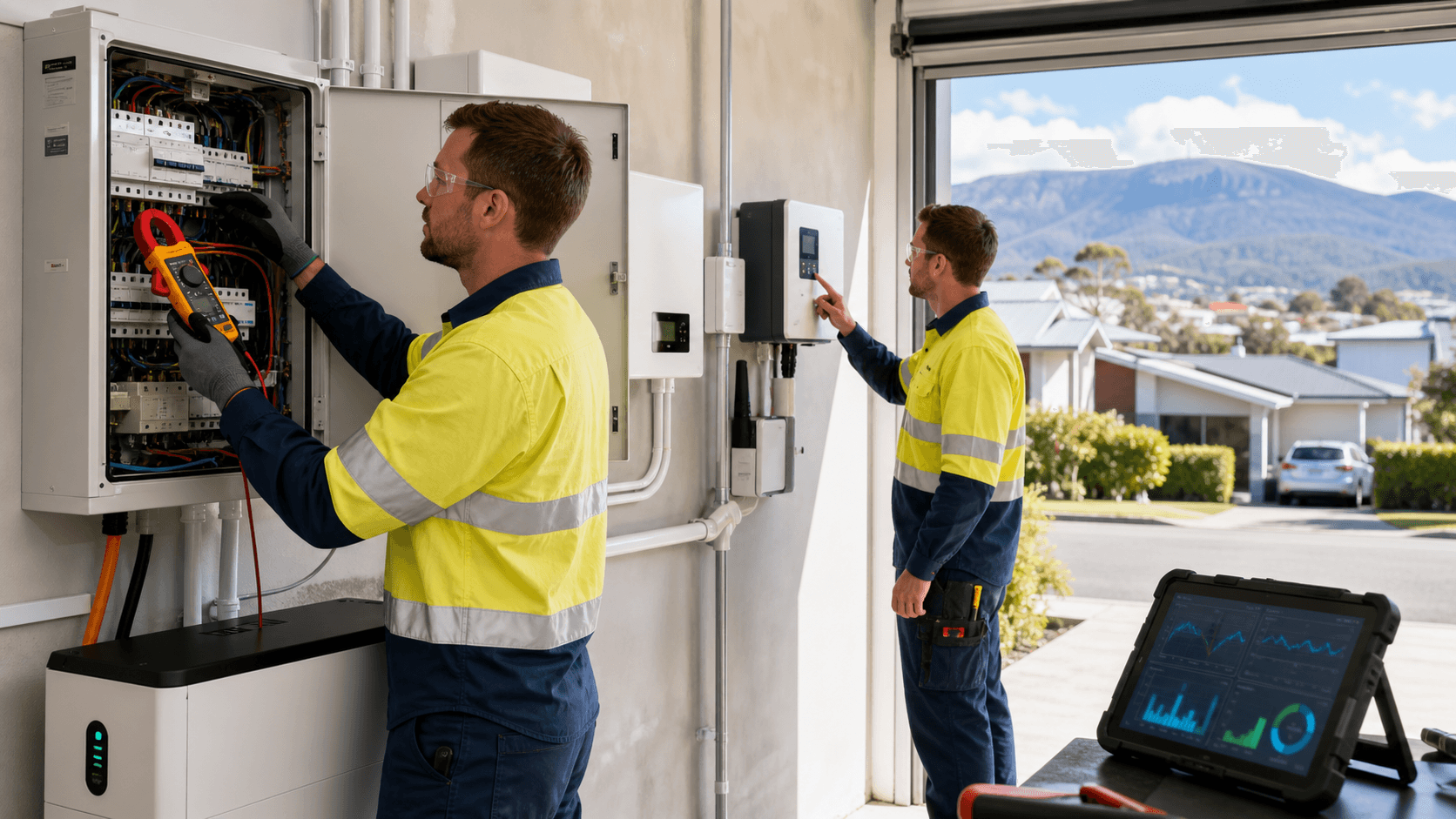
Your switchboard is the control centre for any solar battery installation in Hobart. During an assessment, we look closely at:
- Age and condition of the panel and door
- Type of protective devices (RCDs, circuit breakers, main switch)
- Space for extra breakers and isolators
- Clear labelling of circuits and solar equipment
Many older Hobart homes still have:
- Asbestos or timber backing boards
- Porcelain fuses instead of modern breakers
- No main isolator for the whole property
- Very limited room for extra circuits
These setups often need upgrading so a battery can be installed safely and in line with Tasmanian requirements. The location of the switchboard also affects:
- Cable routes from the battery to the board
- Whether cabling can be concealed for a neat finish
- How easy it is for inspectors and emergency services to access controls
A thorough switchboard check means your design, pricing and timeframes are based on what is really on your wall, not guesses from a satellite image.
Metering, Tariffs and Communications
Your meter and tariffs shape how your battery works financially. During a site assessment, we look at:
- Whether you have a basic accumulation meter or a smart meter
- If your current setup is already solar-ready
- How much space is left in the meter panel for upgrades
In Tasmania, homes often run with:
- A general light and power tariff
- Off-peak tariffs
- Controlled load for hot water or heating
Adding a battery can change which tariffs make sense. It may be better to shift more usage to standard tariffs and let the battery do the heavy lifting, or keep some controlled loads for very cheap night power. Network rules can also set export limits, or in some cases require zero export. Your meter and switchboard layout have to support this safely.
Modern batteries rely on reliable communications for monitoring, remote support and software updates. Part of the assessment is making sure:
- Wi-Fi or Ethernet is stable near the planned battery location
- The router position inside the home gives good coverage
- There are options like range extenders or data cabling if Wi-Fi is weak
In parts of Southern Tasmania with patchy mobile coverage, we also think about whether 4G-based monitoring will be reliable and what alternatives may work better.
Compliance, Approvals and the 4front Assessment Process
Solar battery systems must follow Australian Standards and Tasmanian Service and Installation Rules. You do not need to know every clause, but your installer should explain how they will manage:
- Grid connection applications and network approvals
- System design sign-off
- Electrical certificates and inspections
- Final grid connection and commissioning
Some Hobart and Southern Tasmanian properties also have extra requirements, such as:
- Bushfire prone locations, where clearances and mounting choices matter
- Coastal sites, where corrosion and weather exposure are a concern
- Insurance conditions around battery placement, access and fire safety
Our assessment process typically runs as:
- Initial phone consult to understand your site, goals and current solar (if any)
- On-site inspection of the switchboard, meter, main supply and cable paths
- Photos and measurements of likely battery locations, inside and outside
- Audit of tariffs, metering type and available panel space
- Communications testing for Wi-Fi or mobile signal near the proposed battery spot
- A design proposal that brings all of this together into a clear plan
Because design, electrical work and solar battery installation in Hobart are handled in-house, there is less chance of messages getting lost between different companies. The approach is slightly different for homes, small businesses and more complex sites like workshops, food venues or accommodation, but the core checks stay the same.
Timing Tips, FAQs and Next Steps After Assessment
Good timing helps your new battery line up with the season when you feel the bill pressure or backup needs the most. In Southern Tasmania:
- Booking assessments ahead of winter can help you be ready for higher heating loads
- Planning before summer can suit those focused on cooling and long sunny days
- Network approval and inspection lead times, plus holiday periods, can stretch out total timelines
It pays to leave some buffer between assessment and when you want the system in and working.
FAQ
Do I need a switchboard upgrade before a battery can be installed?
Not always, but many older boards do need work. The assessment will show if your current setup is safe, has space and meets Tasmanian rules.
How long does a site assessment take at a typical Hobart home?
Most standard homes take around an hour on site, plus time off-site for design and paperwork. Larger properties or businesses may take longer.
Can I add a battery to my existing solar system without changing my meter?
Sometimes, but if you do not already have a suitable smart meter, a change is often required to keep things compliant and to record imports and exports correctly.
Where can the battery be installed and what space do I need?
Batteries can go on walls or on the ground, indoors or outdoors, depending on the model and rules. You will need a clear area with safe access, correct clearances and protection from weather and damage.
What information should I have ready before my assessment with 4Front?
It helps to know your average bills, your main energy uses, any existing solar details and any future plans like EVs or renovations.
How much does a solar battery installation site assessment cost?
The cost can vary with the type of property and complexity. Your installer should explain any fees upfront and what is included.
What happens after the assessment if I choose to go ahead?
The installer finalises your design, submits network applications, books any required switchboard or meter work and then plans the installation and commissioning.
Get Started With Your Project Today
If you are ready to cut your power bills and gain more energy independence, we can help you plan the right solar battery installation in Hobart for your home. At 4Front Services, we assess your energy use, discuss your goals and design a system that fits your budget and lifestyle. Reach out to our team today via our contact page and we will organise a prompt, obligation free discussion about your next steps.
With over 30 years of combined experience serving Tasmania, 4Front specialises in custom electrical and solar installations, heat pump systems, energy-efficient lighting design, and comprehensive energy audits. We also provide tailored heating, cooling, and energy efficiency solutions to suit your home and lifestyle.
Serving Greater Hobart & Southern Tasmania
0468 059 603
info@4frontservices.com.au
Shop 91/29 Channel Hwy, Kingston TAS 7050