Home Battery Storage in Hobart: Staying On When the Grid Is Off
Home battery storage in Hobart is a backup power system that stores electricity on-site and automatically runs key household circuits when the Tasmanian grid goes down. In Hobart's short winter days, cold temperatures and storm-prone conditions, an appropriately sized battery can keep lights, communications and essential equipment running quietly and safely when the street power fails.
For many homes, that means better protection from blackouts, lower power bills, smarter use of solar, and more energy security during winter storms. With electricity costs rising and storm-related outages becoming more common across southern Tasmania, more people are looking past noisy generators to quieter, smarter options.
As a local electrical contractor, we design solar, battery, electrical and smart security systems specifically for Tasmanian homes and small businesses. In this guide, we will walk through which circuits to back up, how islanding works, how batteries compare to generators, how current Tasmanian incentives influence timing, and how a well-designed system is put together.
How Home Battery Storage in Hobart Actually Works
On a normal day, a solar and battery system is pretty simple from your point of view. Solar panels produce power whenever there is daylight. Your home uses that solar energy first, then any extra goes into the battery. If the battery is full, remaining solar usually feeds back into the grid.
When the sun is low or the sky is cloudy, your home draws power from the battery. If the battery runs down, you then draw from the grid as usual. It all happens automatically through the inverter, so you just go on using appliances like normal.
Islanding is what happens when the grid fails. The system detects the outage, safely disconnects your home from the street supply, and switches into backup mode. During this time, only the circuits wired into the backup panel are powered by the battery and any solar your system is making. This keeps energy flowing inside your home without sending power back into damaged lines outside.
Hobart has short winter days, frequent storms, damp conditions and high heating loads, so design matters. When we size batteries here, we look closely at:
- Evening and early morning usage
- Heat pumps and how often they run
- Electric hot water timing
- Any medical or business loads that must keep running
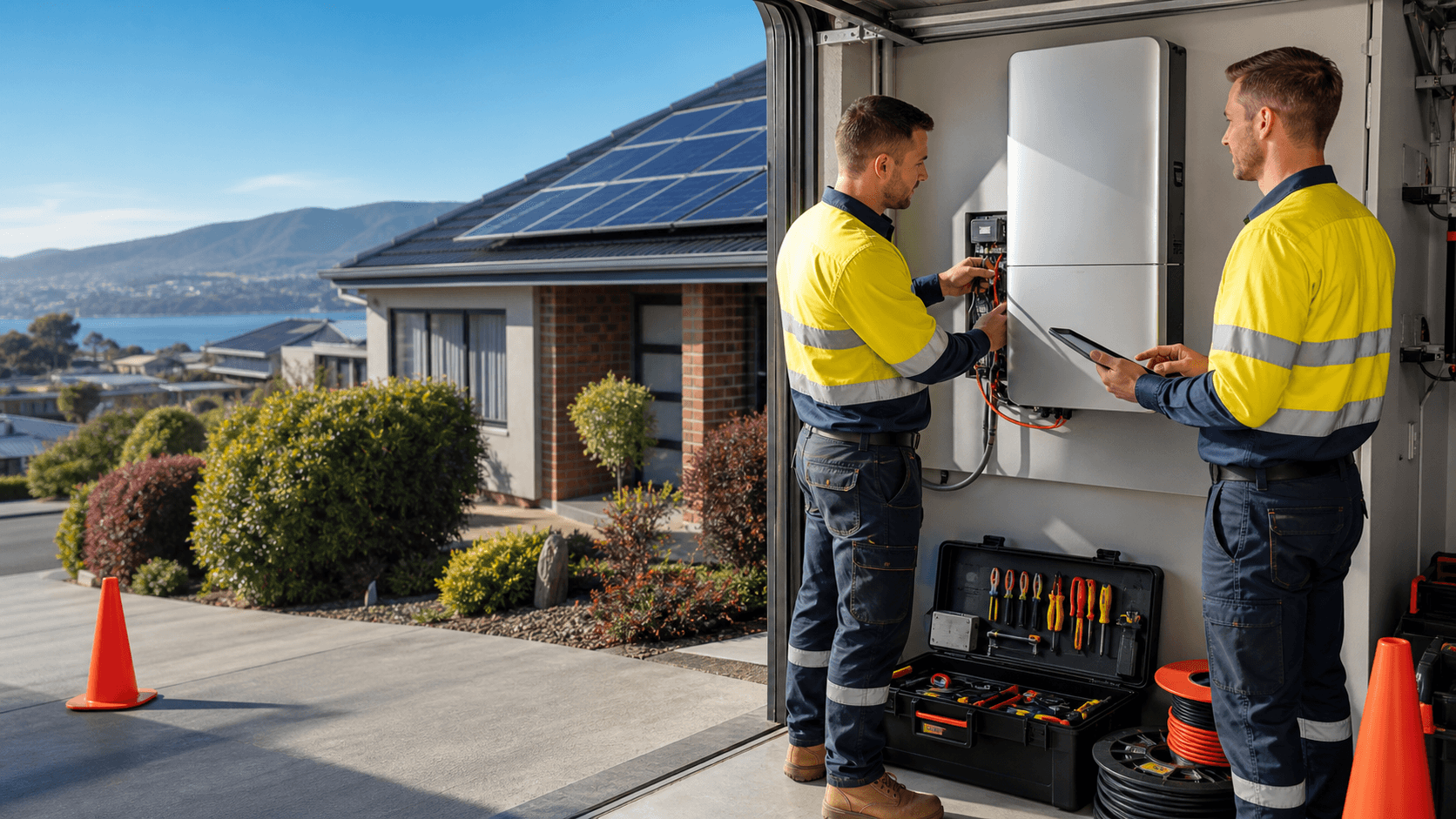
A typical home setup might include:
- Solar panels on the roof
- A hybrid inverter that manages both solar and battery
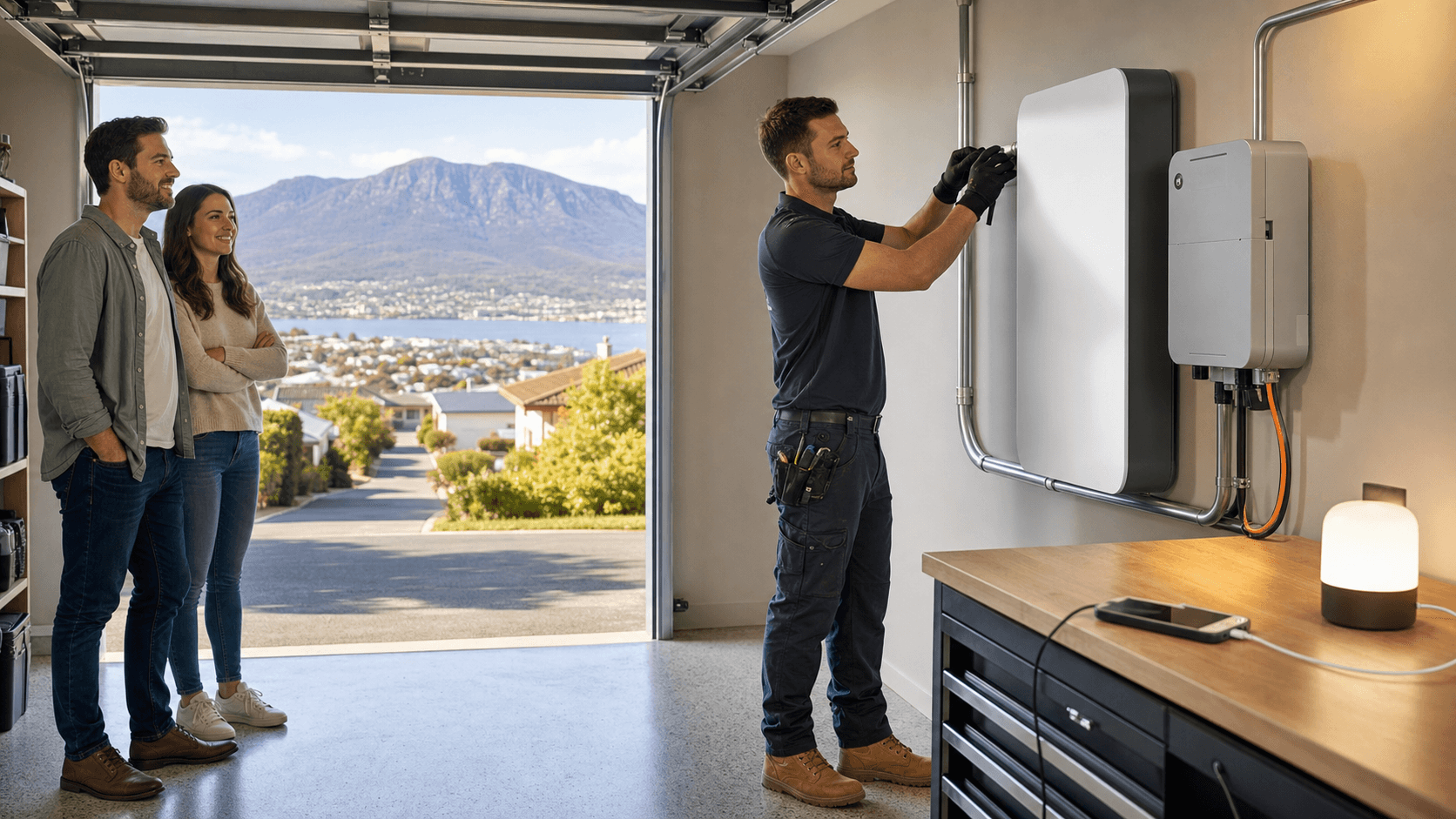
- A wall-mounted battery unit
- A smart meter or monitoring unit
- A dedicated backup switchboard for important circuits
- A phone app so you can see battery level and solar production
Some people want a pure backup system that mostly sits ready for outages. Others want day-to-day savings, using the battery every night while also having blackout protection. Both approaches are possible with the right design.
Choosing Essential Circuits for Blackouts in Tasmanian Homes
Essential circuits are the parts of your home you choose to keep powered when the grid fails. In most homes, not every light and power point is backed up. That is because larger loads need big batteries and in some cases it is simply not practical or safe to run everything at once during an outage.
Common choices for Hobart homes include:
- Fridge and freezer so food does not spoil
- Wi-Fi modem, router and NBN gear
- A few key lights in living areas, kitchen and hallway
- Selected power points for charging phones and laptops
- Garage door or gate motor
- Any medical equipment
- Sometimes a small home office or water pump
Backing up heat pumps or electric hot water can work in some homes, but it needs careful thought. Heat pumps draw a lot of power on cold nights. If your battery is not sized for it, you might:
- Drain the battery early in the evening
- Lose power to more important loads later in the night
- Put extra stress on the system during long outages
During our design process we:
- Visit your property and walk through how you use power
- Review your main switchboard and any sub-boards
- Map out your critical loads and nice-to-have loads
- Design a dedicated backup panel for the chosen circuits
Comfort and safety in winter blackouts is about more than just power. Good lighting so people can move safely, working communications, enough outlets to charge devices, some way to cook or heat food, and keeping kids or older family members calm all matter. A clear plan for what stays on makes outages far less stressful.
Generator vs Battery in Hobart's Winter Outages
Many Tasmanian homes already have or have considered generators. They can still play a role, but they are different to batteries in a few key ways.
Generators usually bring:
- Lower upfront equipment cost for basic units
- Ongoing fuel costs
- Noise and fumes that neighbours notice
- Regular maintenance to ensure they actually start
- Manual start and stop in bad weather for many models
Batteries usually bring:
- Higher upfront equipment cost
- Very low running cost because they use solar or off-peak grid power
- Silent operation with no fumes
- Little regular maintenance for most systems
- Instant automatic backup during outages
A generator can suit rural properties that face very long outages or have very large loads like big workshops or pumps. For many suburban Hobart homes, a battery is often more comfortable and easier to live with day to day.
Practical issues matter in winter. Fuel has to be stored safely and can run out in a long storm. Starting a generator in the dark and rain is not fun. Noise can be a problem in tighter streets. Any backup solution also needs to comply with Tasmanian regulations and electrical safety standards.
A well-designed battery system, especially paired with solar, can ride through many outages with no refuelling and no manual work. For rare, very long blackouts, some people choose a hybrid approach where the system is built with a generator input so the battery can be topped up when needed.
2026 Tasmanian Solar Incentives, STCs and Timing
There is a dedicated 2026 Tasmanian Solar Incentives page that covers current rebates, feed-in tariffs and local schemes in more detail, including how they apply to batteries. It is the best place to check what support is available right now for your size of system.
Small-scale Technology Certificates, or STCs, lower the upfront cost of eligible solar systems. From 1 May each year, there is a taper where the number of STCs steps down, so systems, especially those with larger capacities such as setups paired with batteries over 14 kWh of storage, receive less value over time.
For 2026, that 1 May taper means:
- Larger battery systems over 14 kWh see a noticeable drop in STC-based support after the cutoff date.
- The same system installed after 1 May 2026 will typically attract fewer STCs and therefore a lower effective rebate.
Installing before that taper lets you lock in higher support and can reduce the overall cost of going ahead. Planning and booking ahead of May helps you secure installation times and maximise the current-year rebate before it reduces.
When we design solutions, we often look at the whole picture, including:
- Solar generation for your roof and orientation
- Battery size compared with your evening and overnight usage
- Heat pumps and how to shift more heating into daytime solar hours
- Simple insulation and draft changes that lower your overall load
Tasmania's cool climate suits efficient heat pumps, and when combined with solar, storage and basic insulation and draught-proofing, many homes can shift a good chunk of their winter heating to self-generated power. That means less dependence on the grid when it is most under pressure and more stable comfort during storms.
Why Choose Us
- We are based in Tasmania and understand local weather, winter load patterns and blackout risks.
- Our work covers electrical, solar, battery storage, heat pumps, insulation advice and smart security as one integrated package.
- We design systems specifically for each home, not one-size-fits-all kits.
- We are used to working within Tasmanian standards, distribution network requirements and approval processes.
Installation Steps
Typical installation steps for a home backup battery system in Hobart look like this:
- Site visit, switchboard check and load assessment.
- System design options with different backup levels and budget choices.
- Support with approvals and any relevant 2026 incentive and STC paperwork.
- Installation of panels, battery, inverter and backup switchboard.
- Testing of islanding and essential circuits so you see how it works before we leave.
- Handover, including monitoring app setup and basic training.
Integrated Security, Smart Lighting and Remote Peace of Mind
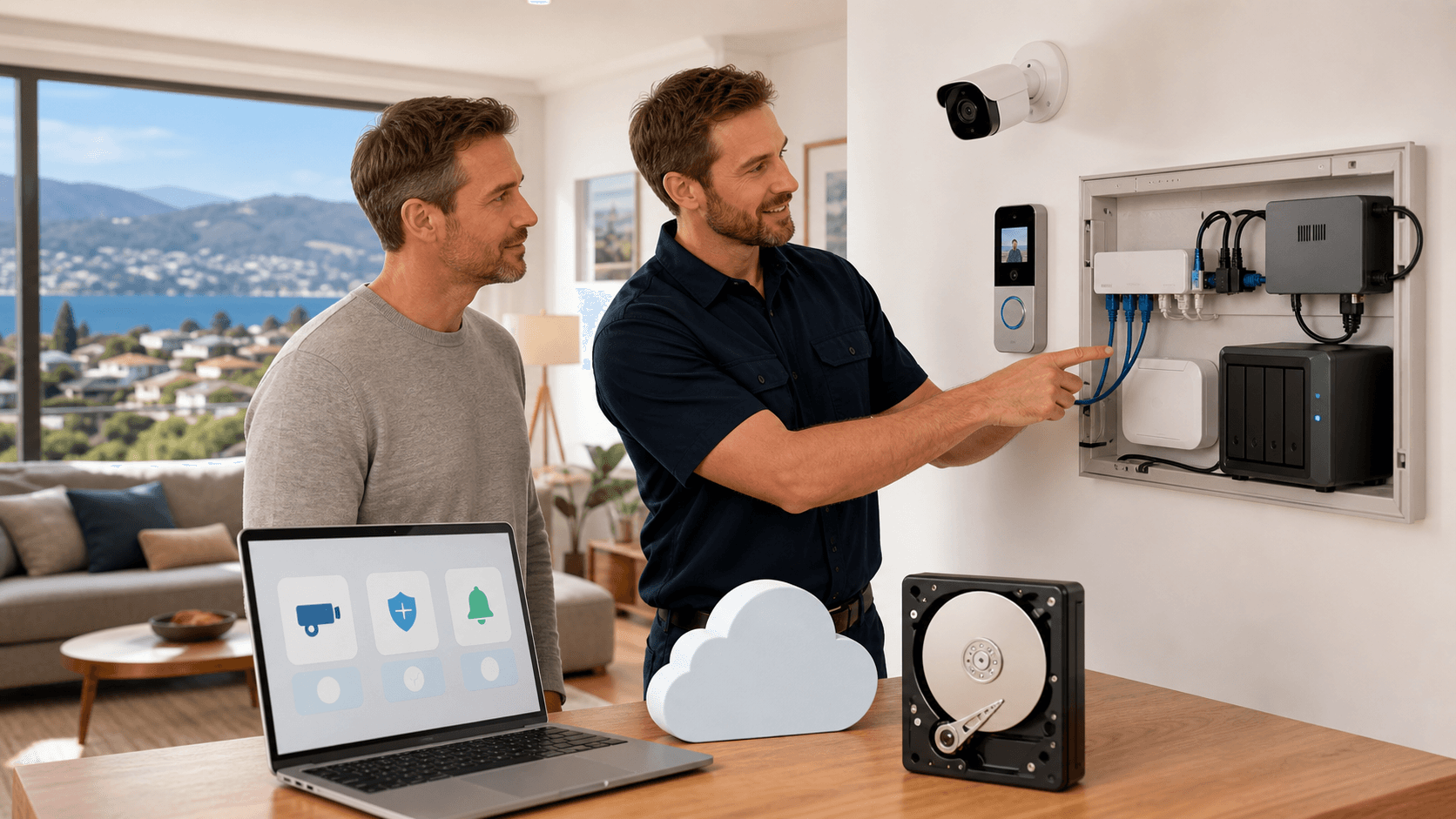
We can also tie your backup battery into smart home controls, integrated security systems and smart outdoor lighting so:
- Outdoor areas stay lit and cameras keep recording even if the street is dark.
- Motion-activated and timed lighting continues to operate during an outage.
- Security systems remain armed and connected, giving you remote peace of mind when you are away or if you cannot get home during an outage.
This integration means your battery does more than keep the lights on; it supports safety, visibility and security for your property in Tasmanian storms and after-dark outages.
After installation, support can include performance checks, maintenance and upgrades if your needs change. That might be more panels, extra battery modules or adding EV charging. Planning before the coldest months helps make sure your backup is ready for winter storms and gives you time to line up any incentives before the next STC taper.
Common Questions About Home Battery Backup in Hobart
Q: How Long Will My Battery Last During Hobart Winter Outages?
A: It depends on battery size and what you run. A well-designed system that backs up only key circuits can often cover a typical evening and night, while running large heaters will shorten that time.
Q: Can I Run My Whole House, Including Heat Pumps, From a Battery?
A: Technically, some systems can, but it is often not practical. For most homes, focusing on selected rooms and loads gives a better balance between comfort and battery life.
Q: What Happens if the Grid Fails on a Cloudy Day With Low Battery?
A: The system will still switch to backup, but it will have less energy to work with. You can monitor the battery level and reduce usage, and any available solar will still help recharge it during the day.
Q: Do I Need Solar Panels to Install a Home Battery in Hobart?
A: No, you can install a battery without solar, but many people pair them so the battery can be filled with your own generation, not just grid power.
Q: Is Home Battery Storage Safe in Cold and Damp Tasmanian Conditions?
A: Modern batteries are designed for a range of conditions and are installed in suitable locations with proper weather protection and ventilation, following electrical standards.
Q: Will a Battery Lower My Power Bills as Well as Provide Backup?
A: In many cases, yes. By storing solar that would have gone to the grid and using it later, you reduce the amount you buy from the grid, especially in the evening.
Q: How Much Does a Typical Backup Battery System Cost in Hobart?
A: Costs vary a lot with size, brand, backup level and site conditions. A tailored design and quote is the best way to understand what suits your home and budget.
Q: Battery Rebates or Incentives for 14+ kWh in 2026?
A: Available support and STC value depend on system details and timing, and rebates reduce after the 1 May 2026 STC taper, especially for systems over 14 kWh. The 2026 Tasmanian Solar Incentives page is updated with current information for larger systems, including those paired with higher storage, and shows why acting before May can lock in higher rebates.
Protect Your Home With Smarter, Reliable Power
If you are ready to make your home more resilient and energy efficient, we can help you design and install tailored home battery storage in Hobart. At 4Front Services, we assess your needs, explain your options in plain language and recommend a solution that fits your budget. To book a consultation or ask a question, simply contact us and our team will be in touch.