Beat Hobart Bill Shock with Deadline-Driven Solar Batteries
Solar battery installation in Hobart means we design and install a battery to work with your solar system so your home can store extra daytime energy and use it later, instead of buying expensive power from the grid. This gives you steadier power bills, reliable backup during outages, and helps you lock in current rebates and tariffs before they tighten.
Across southern Tasmania, many homes are feeling rising electricity costs, especially in the evening when everyone is cooking, heating and using hot water. A battery lets your home catch that extra solar from the middle of the day and use it when the sun is down, during storms, or when the grid goes off.
Right now, the timing of when you install matters almost as much as what you install. Government incentives, solar feed-in tariffs and battery rebates are not set in stone. When they change, they usually get tighter, not better, and that can mean losing out on years of savings you could have locked in.
If you are thinking about a solar battery, treating it as a deadline-driven project can be the difference between a good outcome and a great one.
Why Choose Us for Solar Battery Installation in Hobart
- Local Hobart and southern Tasmanian specialists who understand our cool, cloudy winters and long summer days
- End-to-end service: solar, batteries, electrical work, heat pumps, EV chargers and security handled by one team
- Deadline-aware advice on current federal incentives, Tasmanian schemes and feed-in tariffs
- Systems designed for bill stability, backup power and long-term reliability in Tasmanian conditions
- Clear, fixed-price proposals with simple payback explanations
- Ongoing monitoring support and maintenance options for long-term performance
How Solar Batteries Work in Hobart Homes All Year Round
At a simple level, a solar battery system for a Hobart home works like this:
- Solar panels on your roof make power during the day
- Your home uses what it needs in real time
- Any extra power goes into your battery instead of back to the grid
- A smart inverter decides when to use battery energy and when to draw from the grid
The inverter is like the brain of the system. It looks at:
- How much solar your panels are making
- How full the battery is
- What your home is using right now
- What your electricity tariff is doing
From there, it chooses the cheapest and smartest power source for each moment.
Tasmania's cool climate is actually good for most modern batteries, which do not love extreme heat. Long summer days can fill a battery early, so you get solar power right into the evening. In winter, the days are shorter and often cloudy, and you may not fill the battery every day, but it can still cut peak-time usage and keep key loads running during bad weather and evening peaks that are common in Hobart.
Bundled, Whole-Home Energy Solutions for Southern Tasmania
Solar batteries really start to shine when they are part of a whole-home plan tailored to Tasmanian living. Many Hobart and southern Tasmanian homes now combine:
- Solar plus battery for daytime and evening power
- Heat pumps for efficient heating and hot water in cold winters
- EV charging for cheaper, cleaner transport
- Home security and cameras linked to reliable backup power
When all of this is designed as one system, it can work with your roof, your switchboard and your everyday habits, not against them. We look at how you heat your home through winter, when you use hot water, whether you charge an EV overnight, and how you use shacks or holiday homes, then shape the system around that.
Time-Sensitive Rebates, Tariffs and the Cost of Waiting
There are usually two main types of support that affect solar battery installation in Hobart:
- Federal incentives tied to solar panel systems
- Tasmanian schemes and feed-in tariffs that affect what you are paid for solar exports
Some of these apply directly to batteries, some sit around the edges, but together they shape the payback of your system. The tricky part is that many of these schemes are reviewed from time to time. Rates can be reduced, eligibility can tighten, and some programs can close to new applications.
That is where deadlines start to matter. Waiting 12 to 24 months can mean:
- Lower feed-in tariffs for exported solar
- Reduced rebate values or support levels
- One or two more winters of higher evening power bills
- A shorter remaining life on your solar panels before they need upgrading
A battery can still make sense after changes, but the numbers may not be as friendly. Treating policy dates as hard cut-offs and getting your paperwork in early gives you the best chance of locking in what is available now.
We track upcoming review dates and rule changes so we can flag time pressure early. If you want to make the most of current incentives, it is important to start the assessment and approval process well before any announced deadline.
Installation Steps: Solar Battery Installation with a Local Specialist
To get a smooth, deadline-driven installation, the process matters as much as the gear. A clear, staged approach usually looks like this:
- Step 1, Site assessment and bill review
An on-site look at your roof, meter, switchboard and any existing solar, plus we take a look at your bills to find your peak usage times, tariff type and goals specific to Hobart and southern Tasmanian conditions.
- Step 2, System design and proposal
Sizing the right battery capacity and inverter, and checking if extra solar, EV charging or heat pump tweaks make sense. You receive a written, fixed-price proposal with a simple payback outline.
- Step 3, Approvals and rebates
Grid connection forms, safety paperwork and incentive applications are lodged on your behalf, with an eye on any approaching rebate or tariff change dates so you do not miss the cut-offs.
- Step 4, Professional installation
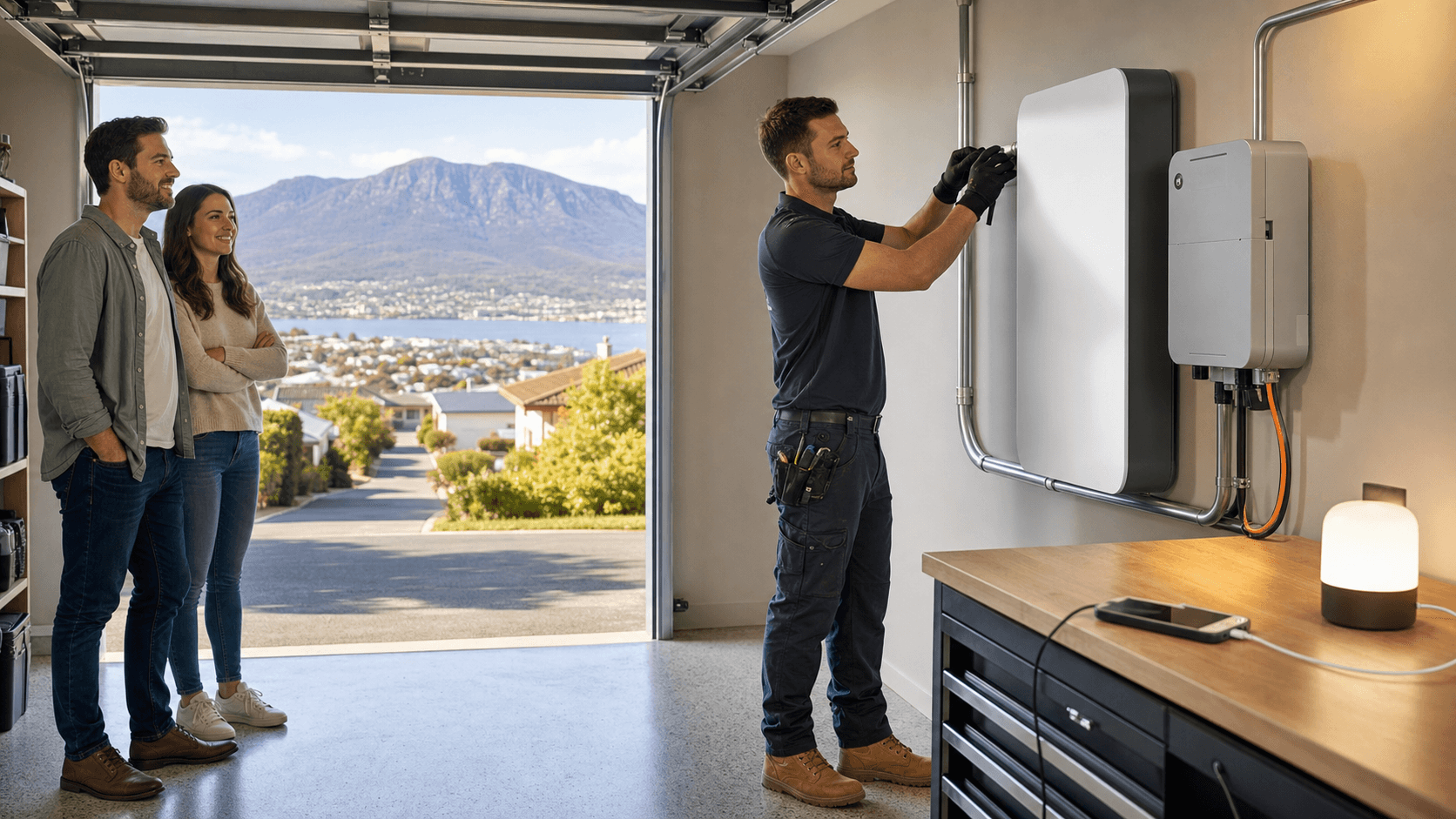
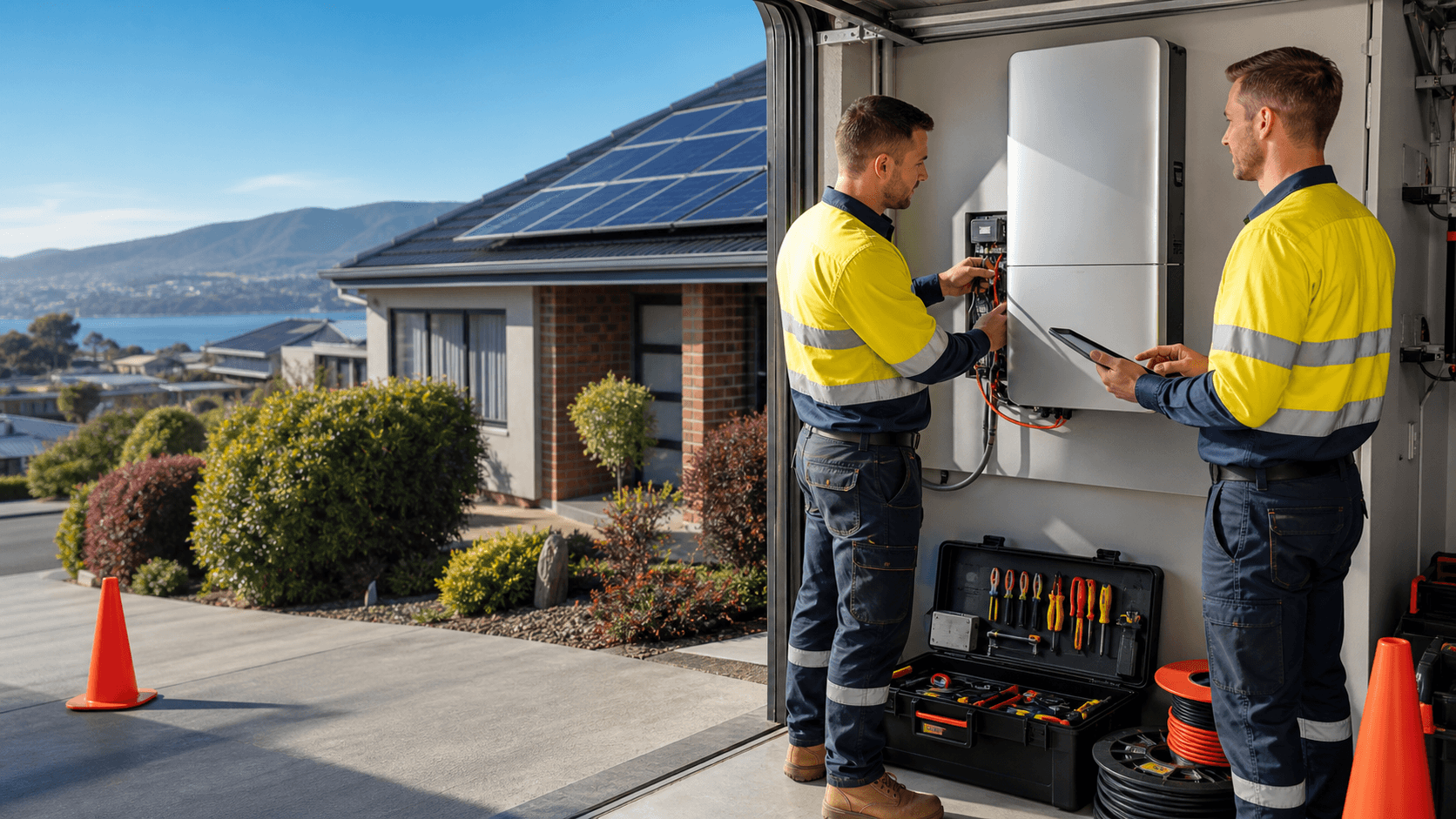
Qualified electricians arrive with a clear plan, complete the mounting, wiring, testing and commissioning, and tidy up so your home is left neat.
- Step 5, Handover and monitoring setup
A simple walk-through on how to read your system dashboard, follow your battery level and use the monitoring app from anywhere.
When you choose a local specialist in Hobart and southern Tasmania, you get people who work with our weather, building styles and local distributors every day. It also helps when the same team handles solar, batteries, electrical work, heat pumps, EV charging and security. That way, one group takes responsibility for the whole system, from first chat to long-term checks, instead of leaving you to juggle different trades or chase answers if something needs attention later.
Remote Peace of Mind with Smart Monitoring and Security
Modern solar battery systems are not just about saving on bills. With the right setup, they can give you remote peace of mind and eyes on your home power from almost anywhere.
Most systems today allow you to:
- See your solar production and battery level in real time
- Track how much energy your home is using
- Check how often you are pulling from the grid
- Look back over days and weeks to see patterns
For Hobart homes, that matters when storms roll through or when there are local outages. A battery can keep key circuits powered, such as:
- Fridge and freezer
- Key lights and power points
- Internet router and some devices
- Security cameras and alarm systems
Combined with home security, this means you can still record, be alerted and check in on your place even if the street is dark. It is especially useful for southern Tasmanian shacks and holiday homes, or for busy families who travel a lot. You can quickly see if the power is on, how the battery is going, and whether everything looks normal, all without stepping through the front door.
If your internet goes down, the battery and solar side will still run locally. You may just lose live app data until the network is back. A good setup will be explained clearly so you know what to expect if the NBN drops out.
Is Now the Right Time to Install a Solar Battery in Hobart?
Not every home will benefit in the same way, but there are clear signs that a battery is worth serious thought right now. It tends to suit homes that:
- Already have solar but send a lot of power back to the grid
- Use more energy in the evening, especially for heating or hot water
- Are planning or already own an EV
- Want backup power for storms and outages
The payoffs are part financial, part lifestyle. You can lower bills, gain some protection from future price rises, enjoy quieter backup compared with a generator, and feel more in control of your home energy.
Waiting can feel safe, but it has its own cost. Every season without a battery is another set of bills at full grid rates, another review cycle where incentives can shrink, and another year where your existing solar earns less than it could have if you had been using more of it on-site.
If you are in Hobart or southern Tasmania and thinking seriously about solar battery installation, treating it as a deadline-driven decision helps you make the most of the current incentives, our local climate and your existing setup, while still planning for changes that may come down the track. Starting the assessment process now gives you the best chance of securing today's rebates and tariffs before the next round of changes.
Solar Battery Q&A for Hobart and Southern Tasmania
Q: Will a solar battery work well in Hobart's cloudy winters?
A: Yes. You may not fill the battery every day in winter, but it can still reduce peak-time grid use and keep key loads running during storms and evening peaks. Tasmania's cool temperatures are generally favourable for battery life.
Q: Do I Need to Install New Solar Panels to Add a Battery?
A: Not always. Many Hobart homes can add a battery to their existing solar system, but we will check the age, size and condition of your current panels and inverter to decide whether any upgrades are needed.
Q: How Do Changing Tariffs and Rebates Affect My Payback?
A: Feed-in tariffs and incentive levels strongly influence how quickly a battery pays for itself. As these are reviewed and often reduced over time, acting before announced deadlines helps you lock in better conditions for the life of your system.
Q: Will My Whole Home Run During a Blackout?
A: That depends on how the system is designed. Most Tasmanian homes choose to back up essential circuits such as refrigeration, lights, power points, internet and security, rather than every appliance, so the battery lasts longer during an outage.
Q: Can I Monitor My System When I Am Away From Home?
A: Yes. Most modern systems include an app so you can see your solar production, battery level and key energy data from anywhere, giving you remote peace of mind for your Hobart home or shack.
Q: How Long Does Installation Take?
A: Once approvals and rebates are in place, most solar battery installations in Hobart can be completed in one to two days on site. Starting early on paperwork is important to meet any rebate or tariff deadlines.
Get Started With Your Project Today
If you are ready to reduce your power bills and gain more independence from the grid, we can help you plan the right solar battery installation in Hobart for your home. At 4Front Services, we assess your current system, usage patterns and budget so everything works together efficiently from day one. Speak with our team to discuss options, timelines and rebates, or simply contact us to book a site visit and obligation-free quote.